MRC But we don't agree. Tuning 12 tones in an equal temperament is only a compromise that works well, happily, for many styles of music, and is suited to the modern piano. It's less suited to the harpsichord, or the string or wind families.
I beg to differ, although I do understand your wish. But I would also like to see you building such an instrument which could encompass all the perfect ratios from at least every single note off of a 4 renova ("octave") ranges.
Do not werry too much about the lowest 12 and the highest 12 notes from a 88 keys piano. They can be hardly ever recognised regardless of tuning.
What you call Just or Perfect tuning is perfect only on paper though or… I will write it yet once again… for a very special case of a single note reference… until the sequence of notes crosses the renova (what you call "octave") of that single tone. You change that root note… you'll need a new set of notes (and you need at least 12 such root notes). It has nothing to do with Music application. It has more to do with ratios where one "note" is derived from a 'root' one up to an extent ("octave").
In the real physical world though things can not be mathematically perfect. Because… time and forces → utilisation. amortisation, environment changes and so on. With a physical instrument you can never play the same note twice perfectly (because of The River of Time… you can not enter in the same river twice… if you remember tho old saying).
We, on the other hand strive for perfectly build instruments, again because of amortisation: we want the strings to stay fresh and protected from the emefents, the keys, buttons, you name it, proportions.
I would like to see your perfectly intonated instrumfent with 200+ notes\strings\pipes (as bare minimum) stay in tune! Good luck with that! Imagine the maintainance of a full blown church organ but in a smaller (hopefully) scale.
Yes, non-fret instruments can play off of non descrete tuning – the player choses – and that is why they offten adjust on the go with a 'pivot slide' movement of the fingers to mask it as a form of vibrato. With fretted instruments it is the same – you can use vibrato and it is quite important technique so you do not sound mechanical in perfect notes as a digital sampler would (with a small library of samples). Again, ggood luck keeping your 'perfectly tuned' instrument to stay in that 'perfect' tune.
In 12TET the word 'equally' is misleading though. It does not refer to space or physical property at all. It is a common ratio coeficient that is 'equal' for the chosen n‑tonal division.
I would like to differ again regarding the special case of 7 notes out of 12. It is an ongoing debate since the time of Aristoxenus but also Pythagoras made it so cumbersome for the next generations of music thorists and explorers. Trust me, the common folk musicians could not care less about this. They played ages before Pythagoras tried to explain notes with math. ratios.
Diatonic vs Chromatic genera. Which one is the best one. Diatonic is popular as it is easy from a modal point of veiw for tha case of staying in a mode. The problem again was that 'perfectly' tuned modes worked for about in a renova ("octave") – above that the higher notes had to be 'adjusted' including the renova (octave).
That is what led to the enharmonic genera, which was a consequence of such rational discrepancies and later debates which higher ratios of numbers fit best to the imperfect notes. With those higher numbers they simply were icreasing the resolution (as we would say today). That is why there are multiple thirds, sixths… and endless debates over enharmonics.
There are enharmonic (we call them 'microtonal' which is a pathetic word) instruments but good luck building, maintaining and learning one such instrument. Violin, cello trombone can be played microtonally – getting it right on the "perfect" ratios though… I doubt any human being can do that every time\tone!
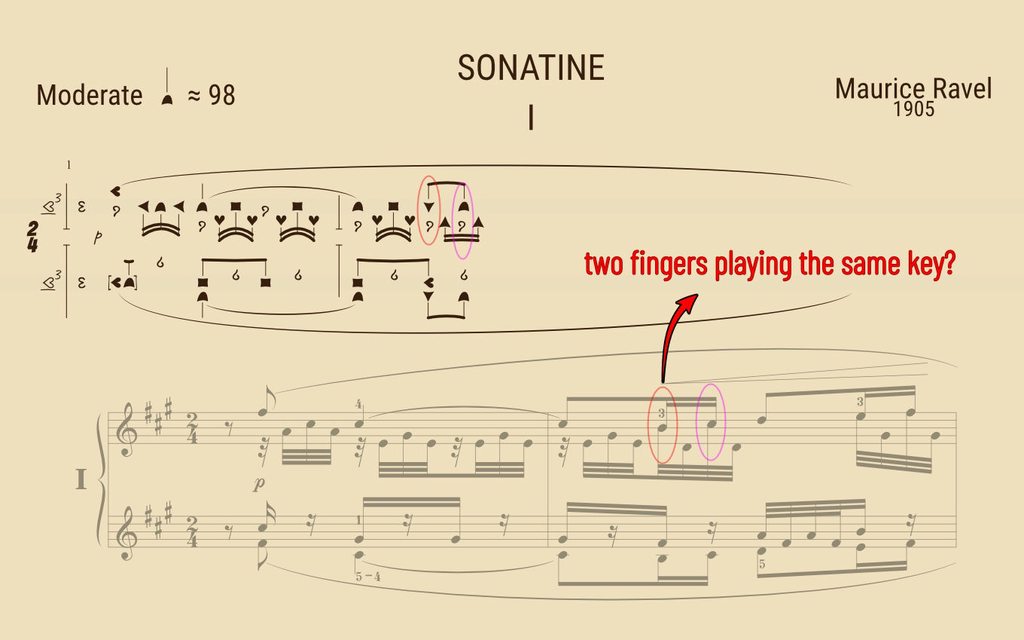
The medieval music notation system (alleged as "standard") is only somewhat suited for the "standard" (Halberstadt) keyboard (piano\organ). Going with key signatures and the rules in the bar for 'accidental' symbols or double‑accidentals and so one is why it is "somewhat" suited. It is only 'perfectly' suitable for diatonic genera modes and big 'white' keys.