MRC
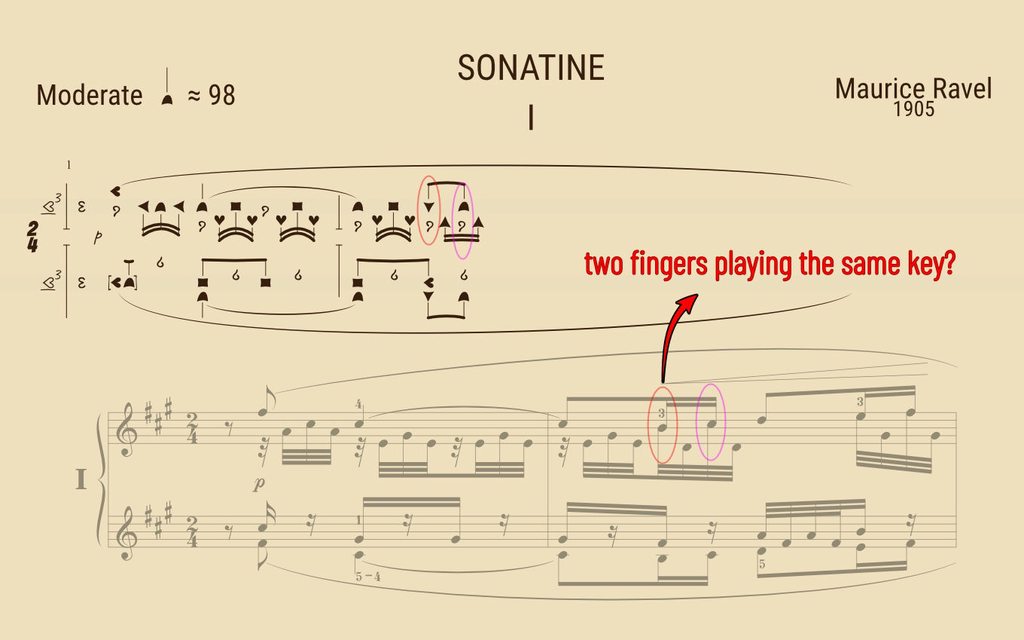
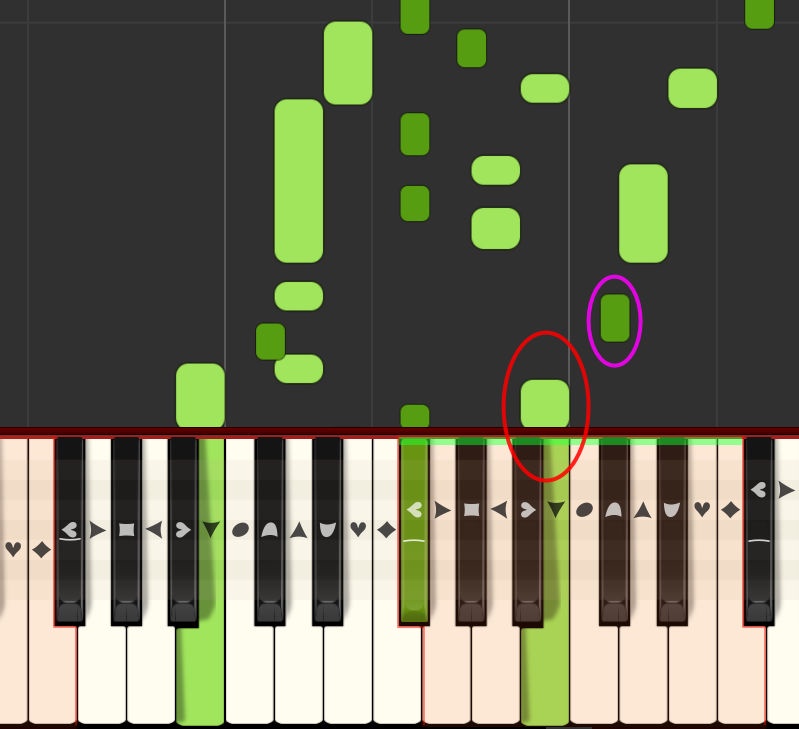
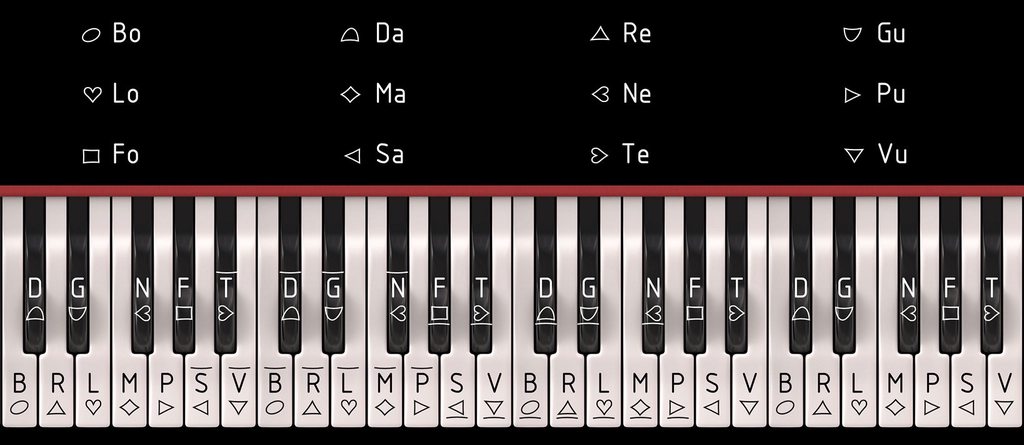
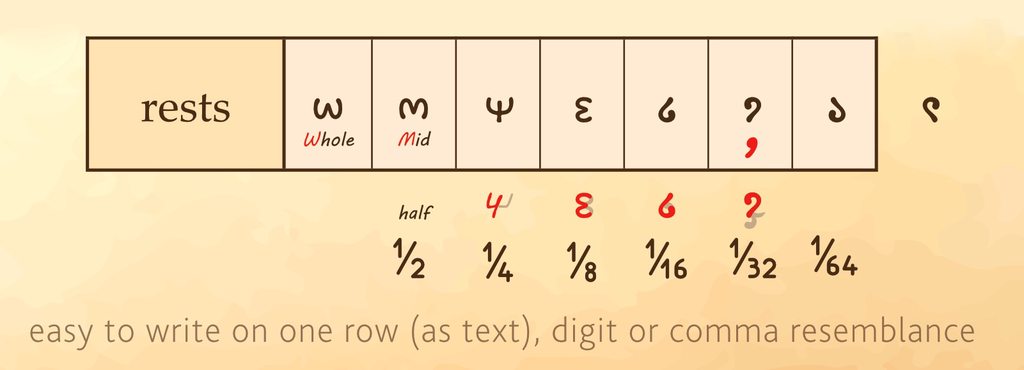
MRC, I can try to translate it (find some suitable MIDI or maybe ORC it) to my PMN system.
This is not a matter of better or worse. You still have to learn it once being understood and comprehended.
It is a matter of simplifying (not as to learn it faster, although it might happen so). For example, the 'geocentric' model is great if you are on Earth (special case). But if you expand your perspective and see the elements – the structure does not change – but it gets more simple to comprehend.
We can start from writting a single music note on a blank sheet of paper and you won't know which one is it untill I place it on the score (five lines). But then again you wont be able to recognise it unless I write the clef… yet again it might need a key signature and then you could tell which note it is. You will be 'lucky' if no keysignature is shown and the clef does not change (position or character\symbol).
If we agree to use 12TET then naming only 7 notes out of 12 is by definition a special case, refering at specific scale structure – or big\'white' piano keys) – the latter is meaningless on let's say violin or oboe, guitar… (it is ok for vibraphone or xylophone). Those are special cases. Now following alphabetic sequence to assign to the 7 out of 12 notes (Latin in this case) is the most (worst) "special" of them all. It works for simple, diatonic music but hardly ever for folk music even across Europe, let alone Eastern\Aian, African etc. Oh, but you have accidentals for such "exotic" scales and modes. Or should remember the key signature (so you do not have to write them in the bars).
Ok, good – yet, another special case.
Example: what if the monks followed Pythagoras\Aristoxenus\Boethius division of monochord and name the notes:
½ is A, ⅔ is B, ¾ is C, etc. esentially what you call "octave", "fifth" and "fourth" respectively.
A → A
today's E would have been assigned the letter B
today's D would have been assigned the letter C
Only at the very end we find the ratio ⁸/₉ (for what we call 'major second' interval), so today's B would be G or maybe H.
The monks used this ⁸/₉ for every next shorter length and assigned the letters of Latin alphabet that way.
It is a joke (ignorance really) as they will not get the full 7 notes. And they skipped the 'augment4 | dim5' for it sounded… bad when combined with the actual string of the monochord! It was not the 6th from 12TET (=0.707106). It was ⁸/₉×⁸/₉×⁸/₉ = 0.70233.
600mm string × 0.707106 = 424mm
600mm string × 0.702331 = 421mm
3mm difference. Imagine your guitar fret at that position moved 3mm to the nut. A "blissful" tone!
They completely dismissed the chromatic genera, yet got so confused by the enharmonic differences. The problem is they had to include chromatic notes such as ♭ and ♮ but they had no idea why that happened from the divisions.
Why there was B (from the second division ⁸/₉→ A then ⁸/₉×A → B) but up the ratios they encountered ♭ and the enharmonic ♮ to B (albeit much higher as a note).
They simply wanted to get some tone references for their special six notes (usually for singing) to tune.
Just to remind you: it is much, much harder to divide in 9 parts any string rather than just in 3 or 4. Also, leads to more errors in precision (considering state of the art around years 980 ~ 1020).
Even if you speak and write as a native in Spanish, it will take time till you learn Portugese (very similar to Spanish, yet different). People expect to comprehend a new perspective or method at a glance. Imagine it took 1800 for people to accept the Earth is round like a ball (yet, many do not think it is, maybe a flat disk at best) and another 200 year that it is not the centre of the Universe\Space\Creation.
This music notation has been here for 800 years and going.