I’ll echo what I said over at PW:
Whenever people make fantastical, outlandish claims about what is possible for a pianist…the first thing I do is think of what is possible for a PIANO.
What a pianist is doing physically is much less important than what a piano is actually capable of. Is what you’re claiming to be doing possible based on the mechanics of a piano and the laws of physics. So, let’s look at the claim from that perspective.
This man suggests that moving the una corda pedal only slightly, and at various exact levels, will somehow cause significant gradations of tone and timbre change, measurably by up to seven degrees.
Well…that seems highly, highly unlikely.
Let’s think of how the Una Corda pedal on the piano works. Simply put, the pedal lifts a rod, that lifts a lever that shifts the action to the right.
The action is shifted slightly so that the following things happen:
- for notes that have three strings, the hammer only hits two of those strings.
- for notes that have two strings, the hammer only hits one of the strings.
- notes that have one string get struck by a softer part of the hammer
Again, even when you only partially push the una corda pedal down:
for notes with three strings: the first string will still be hit with the soft part of the hammer until the hammer completely clears the string. That’s it.
for notes with two strings: the first string will be hit with the soft part of the hammer until the hammer completely clears the string. That’s it.
for notes with one string: the string will be struck with the soft part of the hammer.
Remember, the grooves in the hammers caused by the strings are fairly small…those grooves are clearly fairly quick to clear even when you only partially put the pedal down, and then it’s just the soft part of the hammer until the hammer either clears the string (for those with more than one string). The bass strings will always just get the soft part of the hammer.
Beyond that, I can’t reasonably see anything else possible. The very, very, very minor changes in tone between those states would be almost impossible for people to detect, as evidenced by the fact that many people here don’t hear anything different. That’s not to mention that it would be nearly impossible to replicate this with consistently.
_
Speaking of consistently: as for the arguments about whether or not pressing the una corda pedal down to different levels would achieve anything…that doesn’t make much sense either. Pedals barely move that much. To achieve these gradations of sound, one would have to move the pedal to the exact position that corresponds with where the hammers need to achieve these sounds. Trying to manipulate the pedal to multiple exact degrees, consistently and accurately to achieve these fantastical multiple gradations of sound, would require a level of accuracy that no human possesses.
Let’s say, for instance, that your pedal moves 2 inches from its unpressed to pressed state. To achieve these mythical seven gradations of sound, one would have to accurately be able to stop the pedal at…
1.) 1/4 inch
- 1/2 inch
- 3/4 inches
- 1 inch
- 1 1/4 inch
- 1 1/2 inch
- 1 3/4 inch
…perfectly, accurately, and consistently, each and every time one plays.
And that’s only if your pedal moves to such a precise degree. If your pedal moves at 2.367 inches from unpressed to pressed, or some other similarly complex measurement, then your ability to accurately achieve the pedal positions to accurately get the 7 gradations of sound would need to be even more precise to the point of laser accuracy.
That’s just not possible. Yes, there’s muscle memory, but this is cyborg/robot levels of control. It’s just not reasonable. Measuring perfect intervals of space accurately is hard enough when you’re trying to do it using your eyes and your hands. Trying to do it with just your feet - when you can’t even look down at your feet and see spatial measurements - AND somehow perfectly remembering EXACTLY how 1 3/4 inches FEELS seems completely unreasonable and impossible.
Not to mention that, should one wear shoes: the measurements would change, and would change depending on each pair of shoes one is wearing, because each shoe heel and material would be different.
Also…any time one is playing on a different piano, these measurements would be different, because every piano is different and even pianos of the same brand and model can have subtle differences.
So…not only would one have to have robotic levels of accuracy and the ability to physically determine spatial measurements by mere positioning of the foot…but one would have to be able to accurately change that each time one has on a different pair of shoes and/or uses a different piano.
This just doesn’t sound possible based on the human body’s capabilities.
Even Chiu doesn’t seem to be able to achieve what he’s saying. In the very video where he presents these ideas:
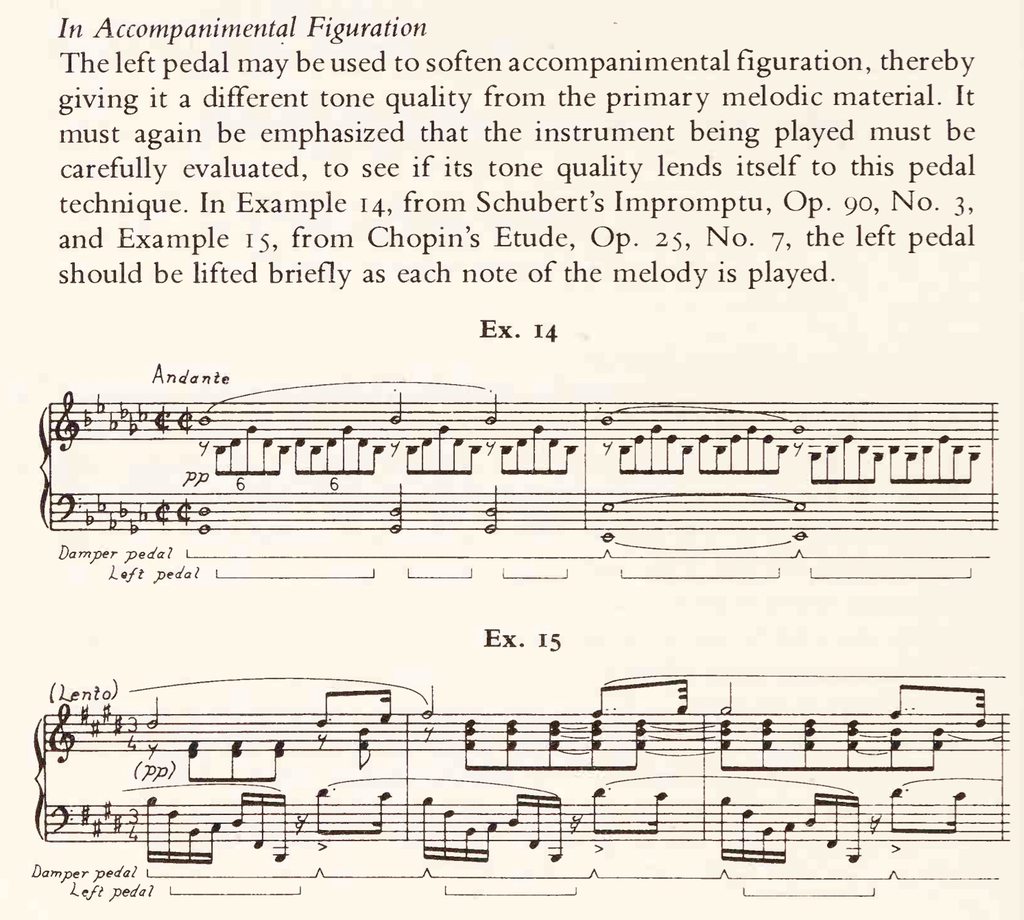
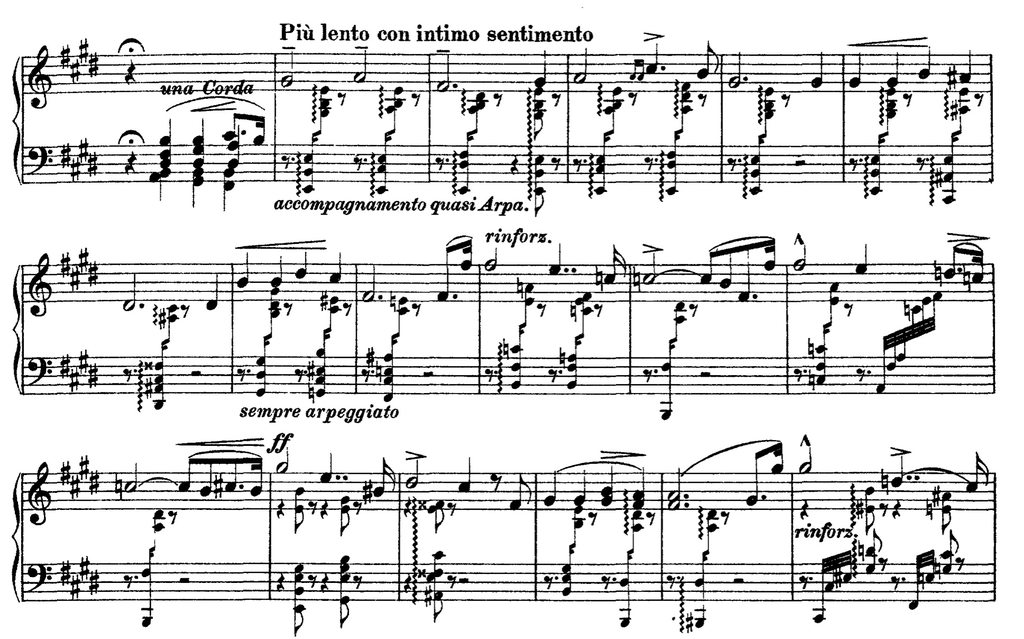
…around the 6:00 mark, he talks about how he’s going to lift the pedal each time he gets to the melody note to highlight the melody. And he does do that for a few seconds…
…but about 5 second into the Chopin passage, he starts lterally pressing the una corda pedal down AS he’s playing the melody. While he starts off doing what he claims, it’s as if his left foot subconsciously begins matching the melody note and before long, he’s actually pressing the una corda pedal WHILE he plays the melody note instead of before.
If he can’t even differential while trying to flutter the una corda pedal, how can he achieve these gradations of sound?
_
We may see people doing interesting things with their left foot and assume that it is having some effect on the sound. However, lots of pianists do interesting physical things. Whether or not the strange things they are doing are actually having any effect is arguable. In competitions, on Youtube, and especially among more publicly available concert venues, You’ll see people in concert fluttering their elbows out, rounding their hands dramatically and gracefully flipping their hands in the air, and lifting their hands high into the air and dropping them gracefully on the keys, and playing with strange positions because this school of thought or that ideology said you should do it…
…yet when we look at what a piano is actually capable of…the stuff they’re doing just doesn’t pass the smell test.
There are A LOT of schools of thought that support unusual physical things…and pianists convince themselves it’s accomplishing when it really isn’t.
_
As for Chiu and his claims…
…people who make Youtube channels need views. That’s how they get paid. And sometimes, saying basic, commonly known stuff doesn’t get the views, because people know it already.
So, instead, some of these YouTube Piano Experts give controversial opinions or fantastical claims with the intention of using that as bait to attract views.
If you had to ask me what this video is, I’d say it’s the former: a fantastic claim for views. However, I don’t see much logic or possibility behind any of it.
_
While I do believe that una corda doesn’t have to be all or nothing, AND that you can use it alternately while playing a piece and use it in quick succession to support melodies sometimes (although that requires a huge amount of new training to now develop perfect right and left foot independence) AND I also believe there may be a tone and timbre associated with half-una corda pedal…
…the idea that you can achieve anywhere near 7 gradations of sound seems unreasonable to me.