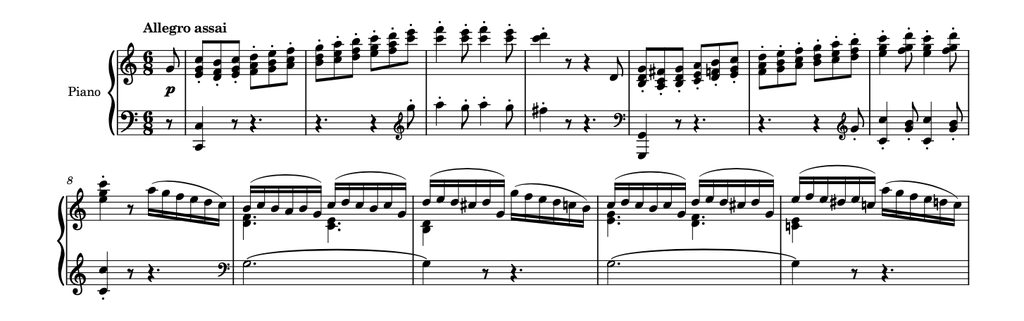
I recognise chords on the page as shapes. A fifth always has the same height on the staff, so I immediately know that all these chords are 5ths:

I also know, without having to think, which ones are perfect and which one is diminished. This knowledge comes from the key signature, which is always the first thing I look at when reading a score.
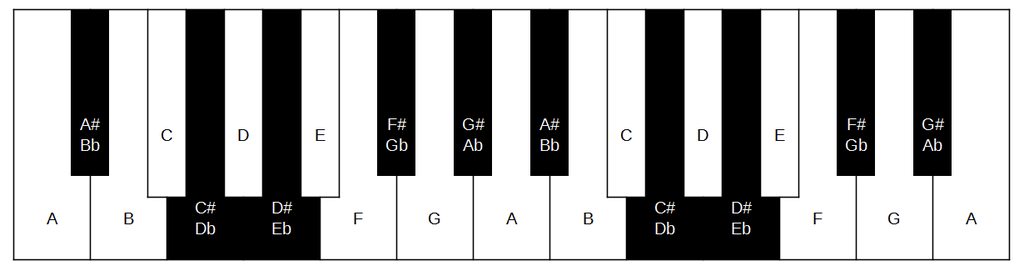
Similarly, I know that these are all first inversions:

When I see such a chord, I don't consciously think "first inversion", I recognise how it feels (my fingers will already be slightly tensing in preparation for playing it, even if there is no piano in sight), and how it sounds.
If the chords were written as groups of letters or symbols, I'd have to memorise each group separately. As it is, I have one shape plus the information from the key signature. I see immediately where the chords are on the piano keyboard from their position on the staff.
Here's the first bar of Ravel's Sonatine:
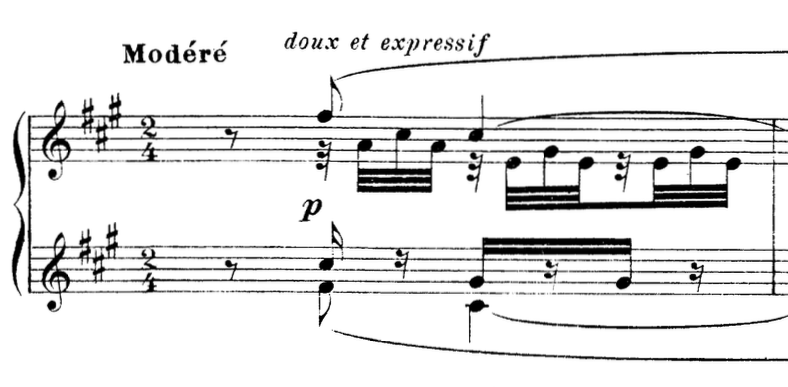
Having first looked at the key signature, I look at the notes. The fifths in the left hand are instantly visible, as are the first inversions in broken chords in the right.
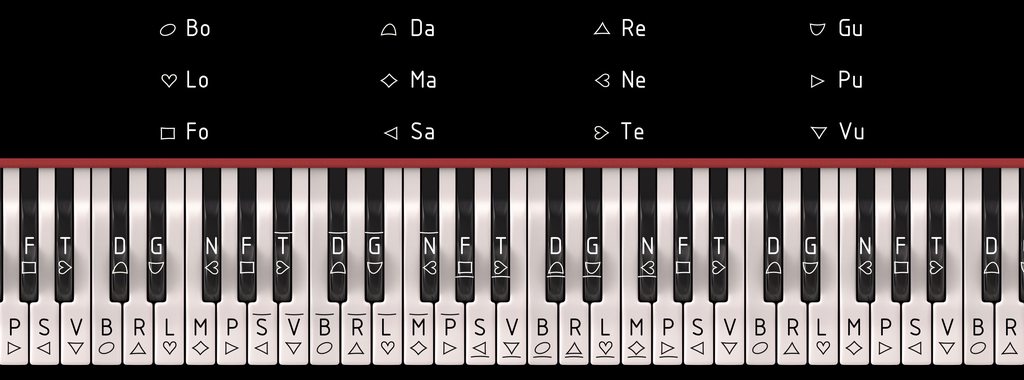
Compare the same bar in Pashkuli's notation:
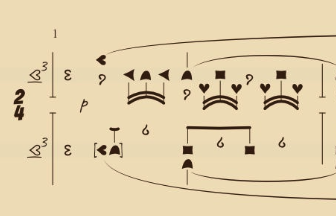
Look at the left hand. The first fifth is written horizontally with no less than 4 symbols: a left parenthesis, a heart on its side, a bell and a right parenthesis. The second one is written vertically, and looks completely different. Apart from the clumsiness of the first group of symbols, neither of them gives me the immediate information that both chords span a fifth.
In normal notation I read the first beat, left and right hands together, as an entity. I see an F# minor chord spread between the two hands. This is instantaneous. I also see that the second beat is almost the same as the first: it's a minor chord distributed in exactly the same way, just a fourth lower down on the staff and thus a fourth to the left on the keyboard.