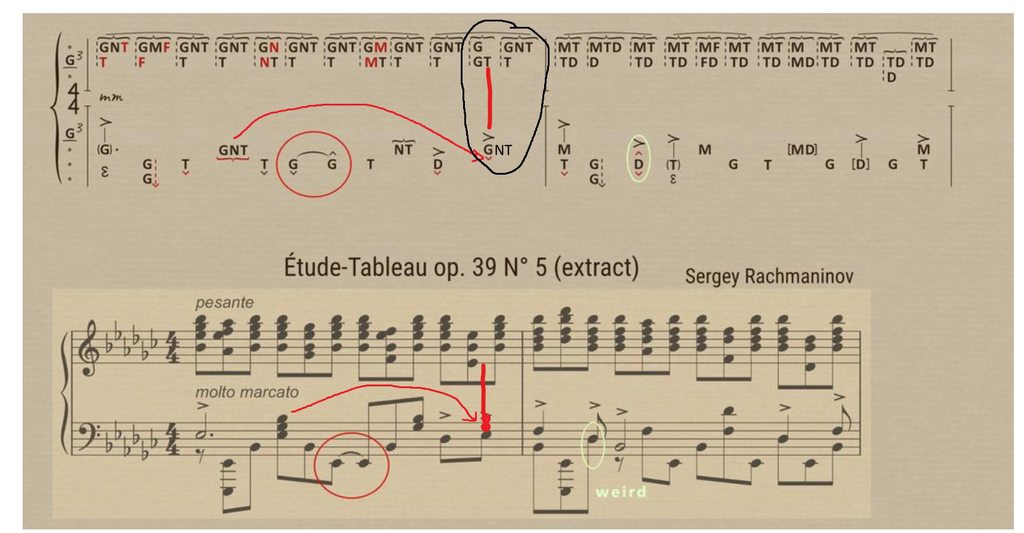
I didn't say you did. If we're talking about a system for writing and thus reading music, then the music aspect must be kept in mind. Your symbols must enable me to also be able to see a larger picture of music, because that is part of reading music. My main problem with those particular symbols is there are same symbols in reverse, and I cannot handle that, I'd mix them up. I don't know if you caught that.
PASHKULI By 'a day' I meant if you were presented with something different and new.
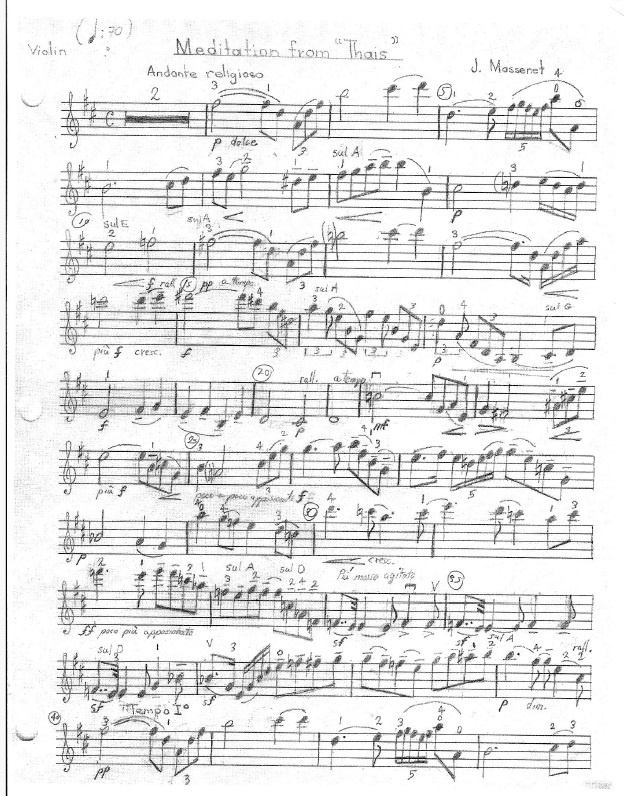
You presented a specific thing, and wagered that it would take at least a day to be able to play that specific thing. You made it unfamiliar by changing the position of the clef, and an odd key signature. In fact, the distortion of something familiar can be more difficult than something brand new with no associations.
PASHKULI If you tell me you started sight reading after day one when you first saw a score in standard" music notation, I will not believe you.
How about if you ask how I started to "read" music when I first encountered it? That would be better. I don't know presently whether you are open to new information. (Are you?)
PASHKULI For example, you might get the gist of reading Spanish (all symbols will be known, some new diacritic amandments on a letter or two) and be able to read in an hour (not much understanding it though), but what about Bulgarian (Cyrillic) or Armenian.
I have a bunch of languages: 3 working languages professionally; three alphabets (Western, Cyrillic, Arabic). 😃 I've gone that route. Cyrillic is super-precise, everything having that one sound so you can read out loud without a clue what the words are. Arabic only has three vowels which are often omitted. FT - is it fat, fit, fate, feet, or foot? Context tells you what they are. French, like English, has ridiculous combinations: sault, sot, saults, sots, all sounding the same. There are vowel shifts so that "shock" may be pronounced "shack", and Americans seem to have lost T (mountain - mou'n, with a glottal stop). I kind of like the precision of German, but may be prejudiced.
(There is, in fact a strong movement with a following, pushing for a radical reform in English spelling.)
Like this? At that time I was learning and it was an aesthetic pleasure. Experienced musicians who still write by hand tend to put in dashes instead of careful oval noteheads. Nowadays most people who want to write music will learn software. I'm in the middle of getting a handle on Dorico.