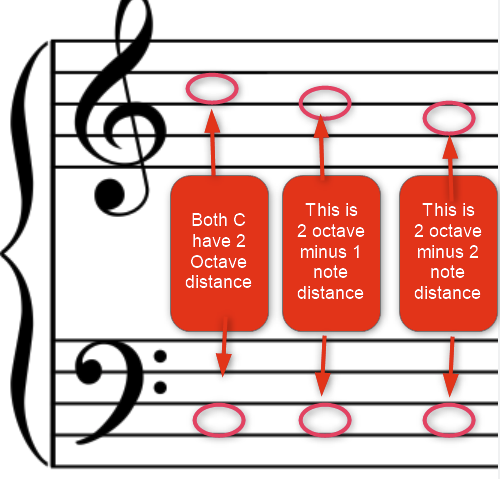
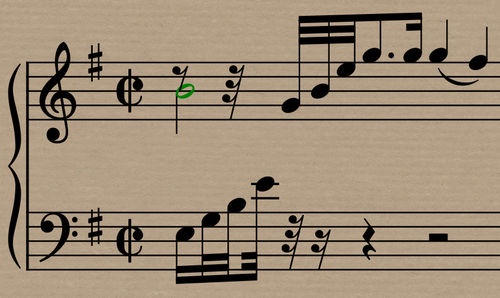
PASHKULI If you ask me, no lines is better, but every note should have its own consonant letter. But we are going 2000+ years back in time. I am trying to build on that ancient concept where diatonic and chromatic were treated as equals.
Oh yes - here music theory comes into play. Every Major scale uses 7 different notes. Every minor scale, too. And in every of our 12 Major and minor scales, everyone of the 7 notes exists exactly 1 once. If you base the music notation around this fact, it makes sense to have the notes as they are with sharps and flats. Even with the fact that sometimes a flattened note is the same as a regular note. E.g. Fb = E. Or vice versa, the E# = F.
As (most) classical music is based around Major and minor scales, you are only using a subset of 7 different notes out of 12. This help tremendous to reduce the required lines in the staff. Or you can say, this helps to increase the note-range with the same number of staff-lines. It just does not fit to blues-scales and gospel-scales (and probably other genres with afro-amerikan roots)
I think if we really try to get rid of sharps and flats and have a dedicated position for every chromatic tone, the amount of lines will overwhelm us. Sharps and flats are bad, but too many lines are even worse.
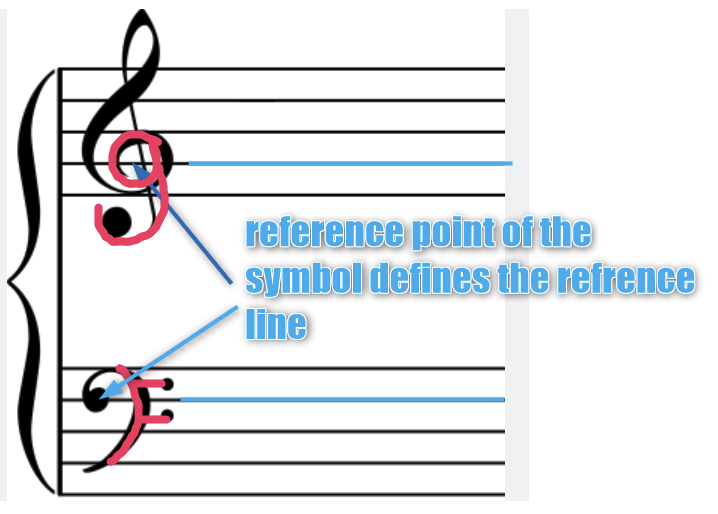
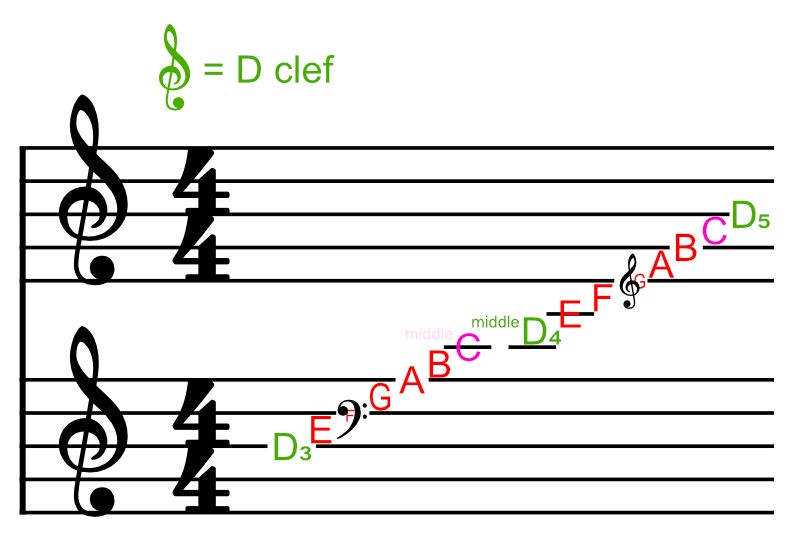
PASHKULI Also, notice that the G clef is now "flipped" (mirrored) so it actually represents a letter D without any need to redesign it in fact. 😉
+1 haha