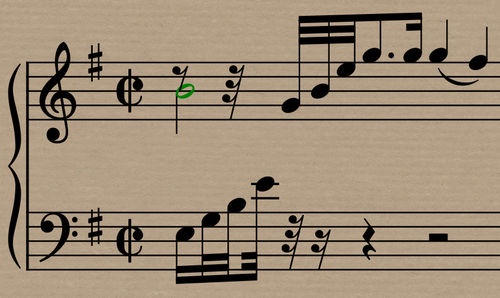
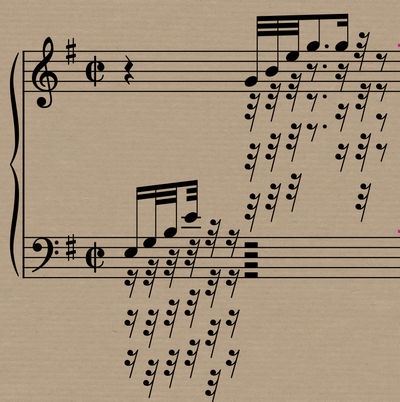
WieWaldi Why not the lowest line without ledgers?
It will be sort of repetition (overlap) but so is the ledger line. Though the more ledger lines the harder\busier to read.
But I guess practice makes perfect so musicians have taught themselves to read three maybe even four ledger lines at a glance. You see it a million times, you remeber it. Similarly to numbers and letters.
I do not think overlap would be a problem but it shortens the range in this case. So I guess one line\ledger is the bare minimum between the staves – but it could be just a space between lines – yet again one line is like a mark. Who knows really, but that is my understanding regarding the "grand" staff.
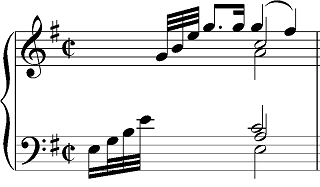
WieWaldi On the keyboard we have D and Ab/G#.
Yes, true… but… not every musician is a pianist after all.
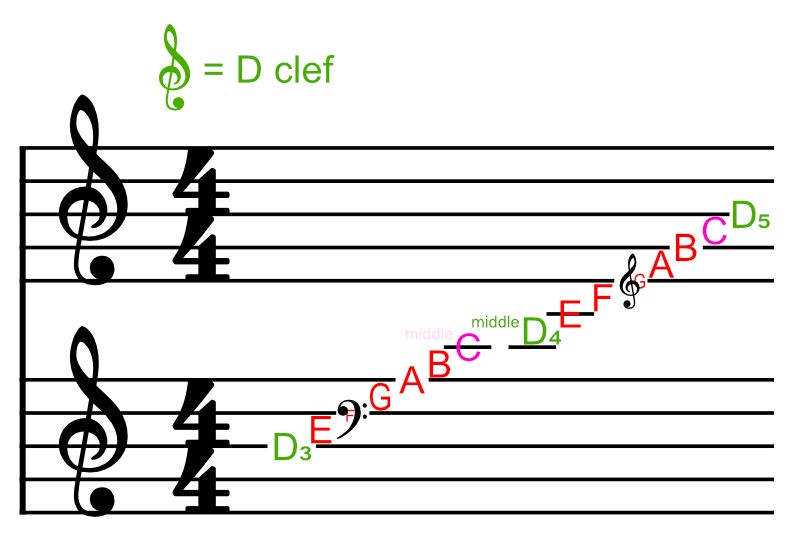
So you are basically saying a D clef would be optimal for both staves on a grand staff. I do agree. And it will be in the middle of the five lines. Then the predisposition would be the uper stave is the 'middle D' and the lower stave is 'submidle D' (renova\"octave" lower than the middle)…
Sorry, my mistake, they will have to be two renovas\"octaves" apart!
So it means that the D clefs (in this case) will be further appart and the actual 'middle D' note will be in the ledger lines between the staves.
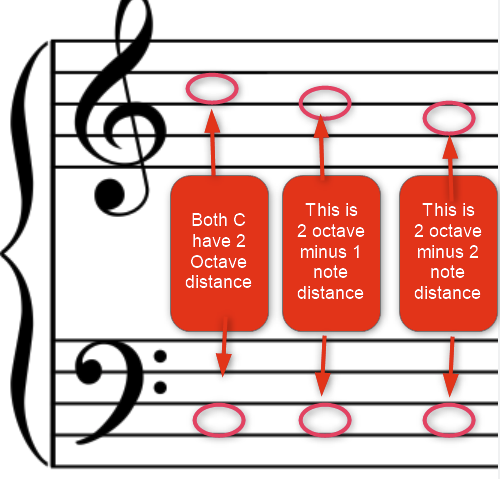
I hope you'd agree that with your staff both F clefs are two "octaves" (I prefer the term renova) apart.
Where on the standard (current) grand staff the F and G clefs are one "octave" (+ two chrom. tones) apart. This is by apearance more continuous than the proposed equal clefs but not that it is crucial.
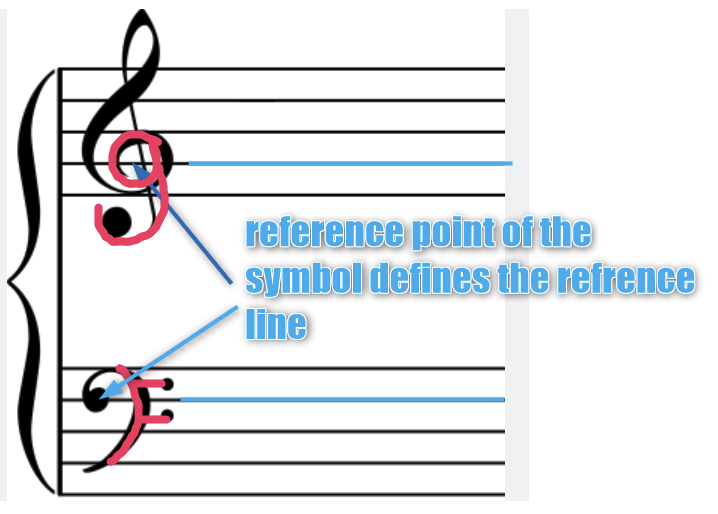
Yes, the F clef is actually the letter F with some "stenographic" dismorphing applied.
So is the G clef, it is the letter G, though heavily dismorphed and actually during the centuries in the past it looked to me more like the small Greek letter sigma σ (but it is not). It is G.