genuse3050
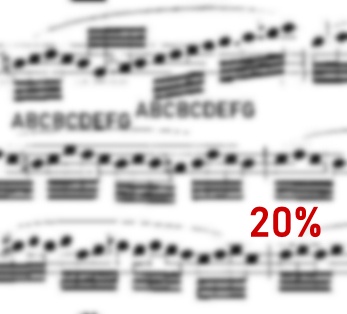
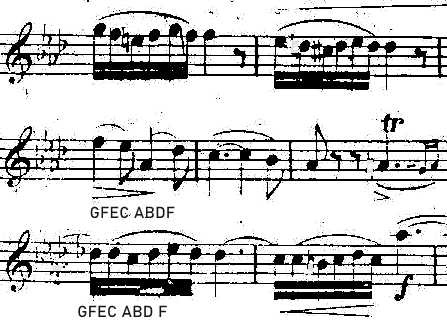
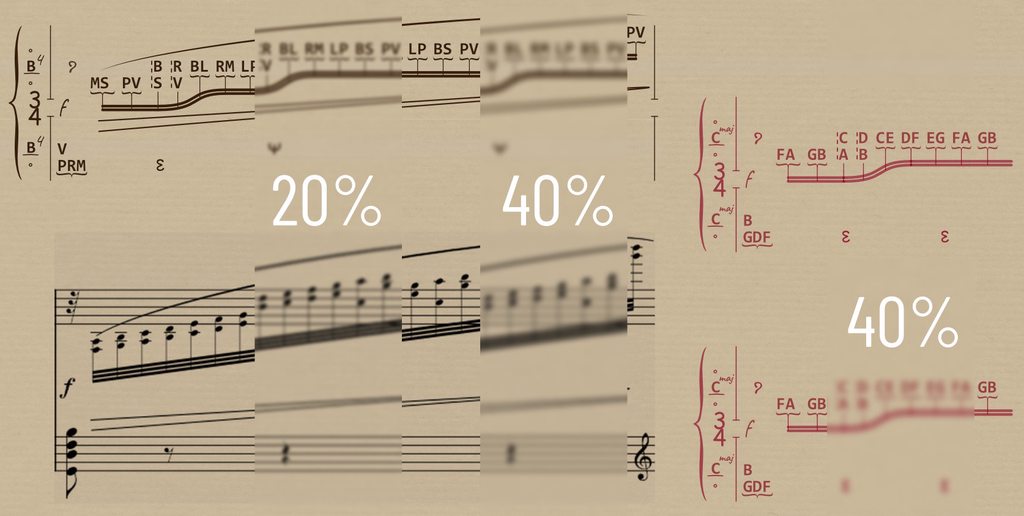
So now we are "arguing" over a blur % which actually depends on the pixel resolution of the screenshot image.
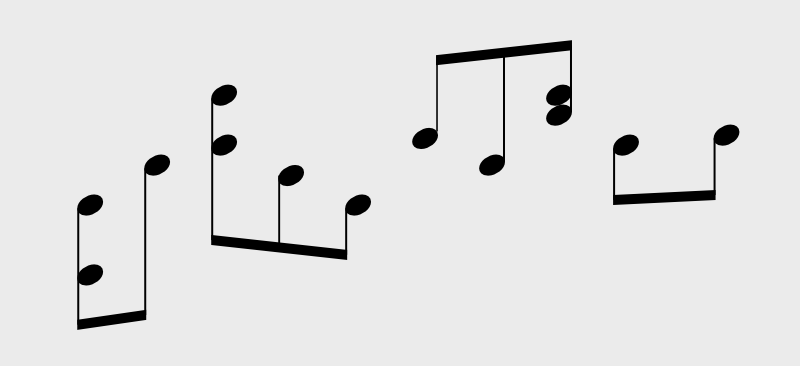
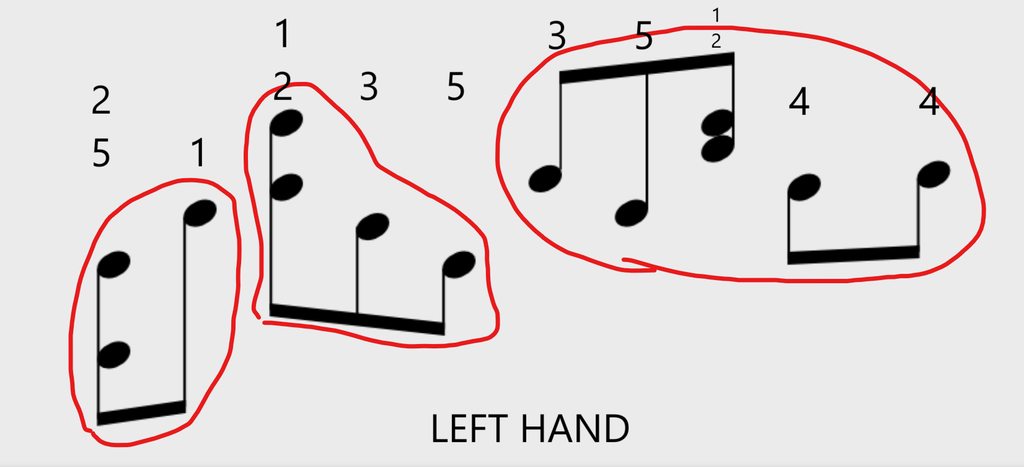
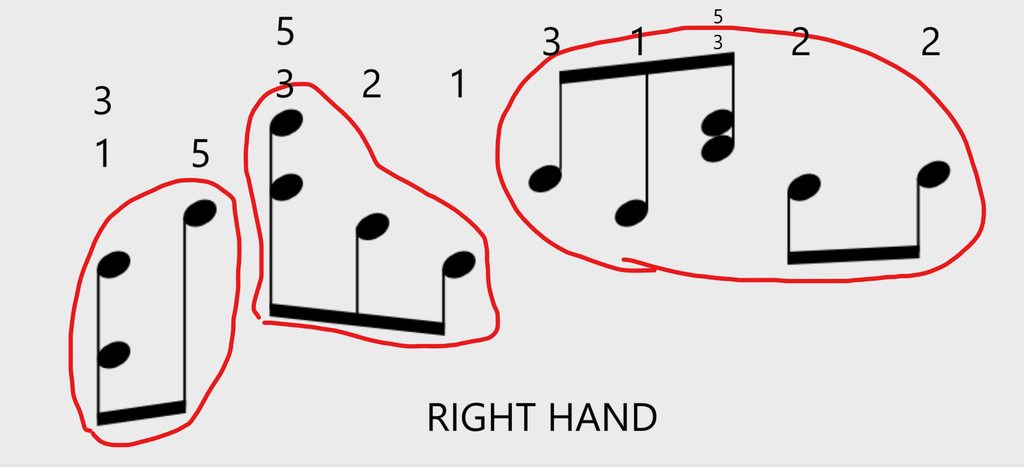
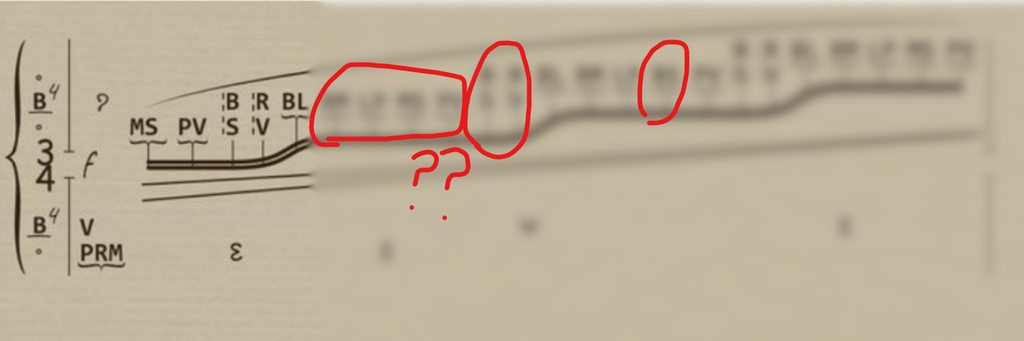
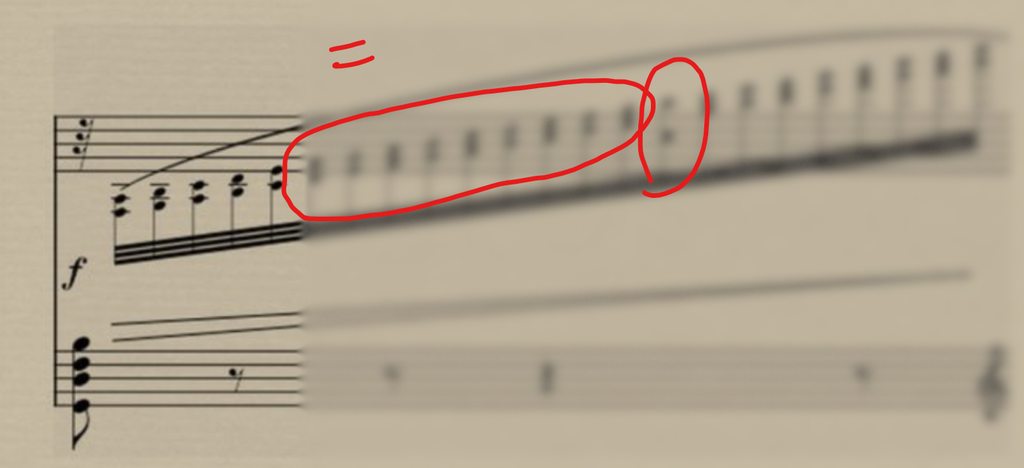
Let me clarify that in PMN (plain music notation) system there is no visual vertical movement for the intervals. Only in a few cases there is one where notes move to another row but the quantity of the interval can not be estimated if you cant read the letters (noteletters\noteheads) symbols.
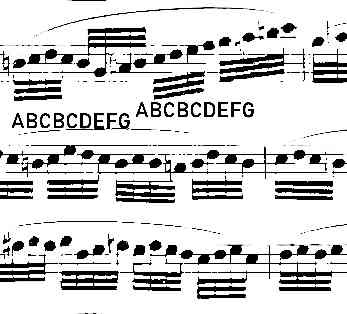
In PMN the player must learn combinations of letters (as words or rather two syllable words) and remember them as intervals. For example (will use the "alphabetic" current diatonic letters):
CB → it is an 11th (you call that maj7th) ascending if C is the root\renova separator as they are in one row
CB → it is a prime or 1st (you call that min2nd) descending if B is the root
CB → how a root\separator is written (just an underline)
CB → is the second example
BC → certainly it is a prime up and definitely C is the root\renove separator (next row up)
CB → prime down
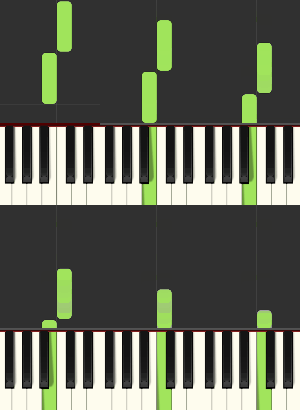
CB → the widest interval possible between two different notes on adjacent rows and C is the root\separator
BC → widest down respectively
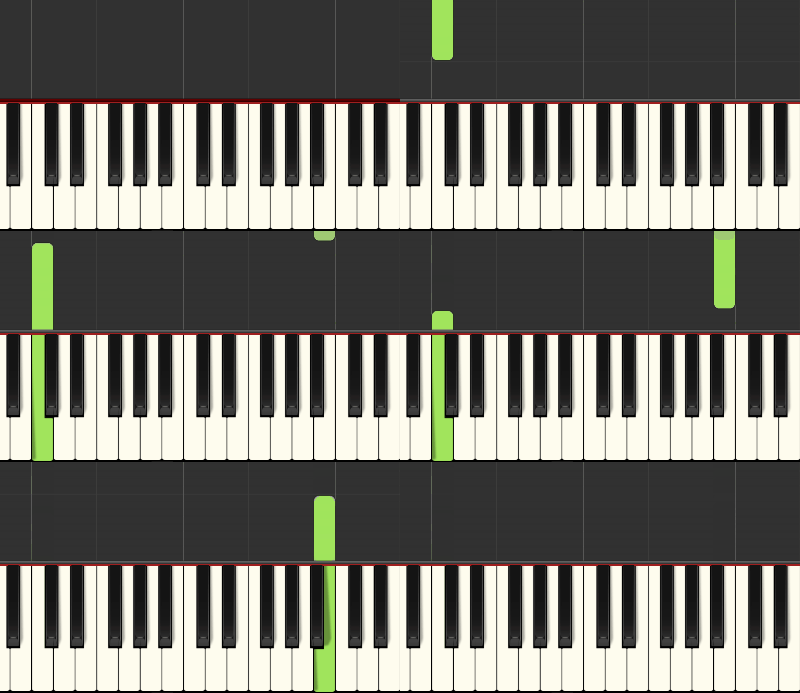
PMN is inteded to be a general Tablature for any instrument, where the player is required to know the notes on the instrument as 12 letters. Those 12 letters are in fact the Alphabet of Music if 12TET is the genera (temperament).
If the player is not familiar (proficient) with the Alphabet of Music by heart (up and down), no further progress can be made.
And this exercise should be done from any starting note (letter). Once mastered, such knowledge is enough to read the notes fluently for any written music regardless of complexity. Then, of course, durations should be trained, intervals of any two letters combined, etc. for a full course.
I suppose you are familiar with this Alphabet of Music as a lazy job "invented" 1000 years ago:
C•D•EF•G•A•BC•D•EF•G•A•B…
This alphabet doеs not have a fixed 'first' letter. Any of the 12 letters can be chosen as 'first' and its role therefore becomes that of a renova row separator (or a clef if you will). It can be changed for any bar where a tonal center changes (for a mode or specific modulation) and that separator (clef\root) appears combined with characteristical interval formula (you may call it key signature) such as:
X4·11 → this is "natural" major
X3·10 → this is "natural" minor
X4·10 → this is "dominant" major
X3·11 → this is harmonic minor
X1·4·11 → this is biharmonic major (arabic major)
…and so on where X is the desired root note