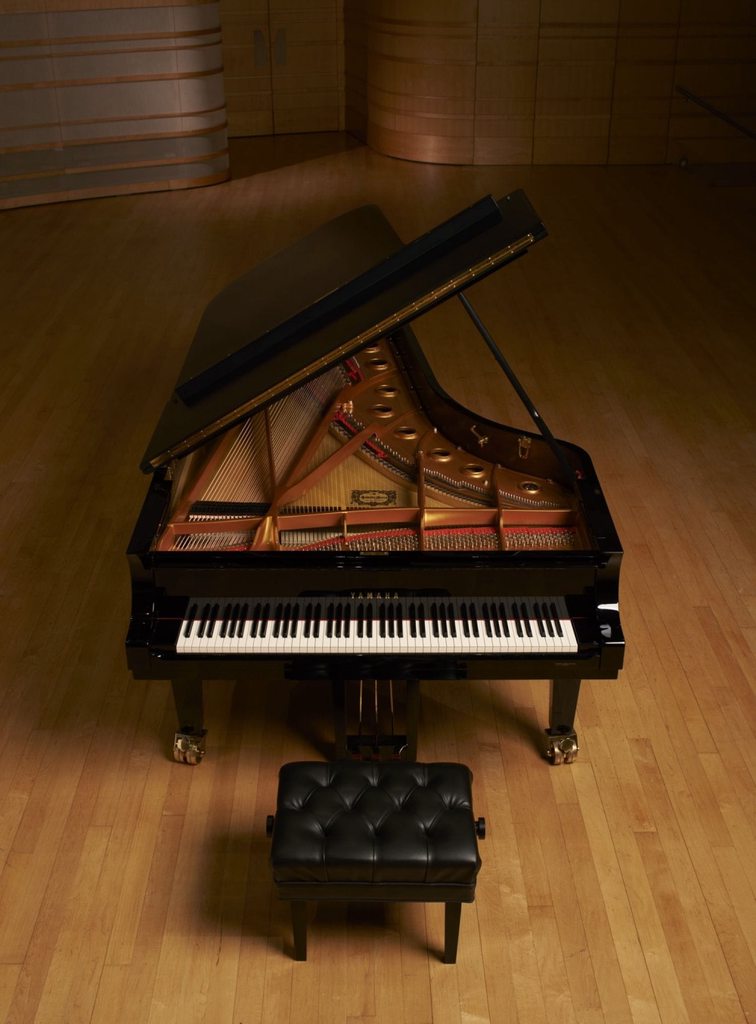
First off, never put anything on a piano that contains liquid of any kind (e.g., a vase of flowers). Accidents do happen, and the last thing you want to end up inside your piano is water (or any liquid). The only exception to this rule, I suppose, is if the piano is never played (i.e., it's just part of the decor); then who cares? And if one must drink while playing, keep a small table near the piano for the glass, cup, whatever.
Second, the primary purpose of the fly lid is to close up the piano for moving. Yes, you could close it to to heavily mute the piano, and I have seen that in some videos, but it's uncommon.
When open, the fly lid does not uncover the hammers; it uncovers the tuning pins. But tuners typically tune with the lid up so they can hear the strings clearly. (To access the hammers on a grand, one has to take out the cheek blocks and slide the action out of the piano.)
Third, never raise the lid of a grand with the fly lid down as it redistributes the lid weight forward, which taxes the lid hinges and could eventually cause them to fail.
Given these caveats, suit yourself as to how open you like your piano to be.