@thepianoplayer416 has put together a pretty good list of good reasons to listen to recordings before/while learning a piece. I'll attempt to add a little color of my own to a few of their points:
Listening to recordings can help you make sure you read the score correctly
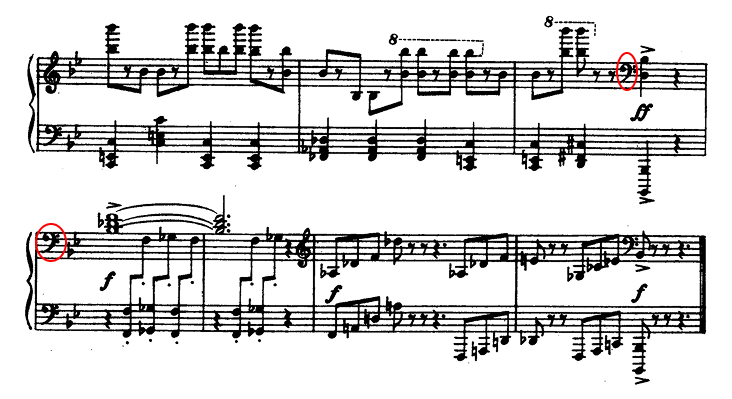
Clef changes and accidentals can trip up even fantastic sight readers — a friend of mine from the local piano meetups whom I consider to be a very good sight reader told me the story of how he missed the clef change at the end of Prokofiev's 8th Sonata, causing his teacher to burst out laughing the first time he played for them and that menacing Jaws-like motif came out in the treble clef.
Listening to recordings without the score can give you the wrong sense of rhythm
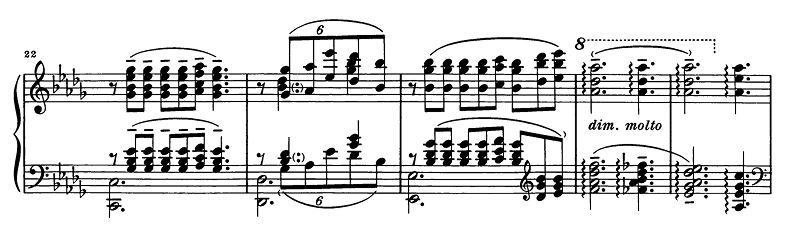
I do think it is important that if you're using recordings as a part of the learning process to spend some of that time listening with the score in front of you. Recordings alone can give you a wrong sense of rhythm — when I finally sat down to learn Clair de lune earlier this year, I had no idea how a lot of the rhythms are actually notated because so many recordings out there take the "Tempo rubato" marking a little too far imo (e.g. the last four chords here are NOT the same duration and still in 3)
Bach Invention No. 6
@iternabe re: your Bach Invention, I haven't studied this piece, but if you think about the harmonies the LH is spelling out then you can see how it might make sense to group B-D#-G# and C#-E-A# in the RH. Also, it seems more likely to me that the 16th notes are the actual pulse to this sequence (on beat) and the 32nd notes are more like ornamentation (although it could be interesting to try accenting the off-beat on a repeat).

As for the overall line, two general possibilities come to mind: you have an ascending melodic line (G#-A#-B) so you could make the 3rd measure the peak (pretty common for 4-bar phrases); alternatively, the most harmonically tense measure is the diminished chord in the 2nd bar, so you could try making that the climax. There's more possibilities out there too; this is where listening to multiple recordings, studying the score, and trying different things while you play can help you avoid constraining your own interpretation.