Musical notation, like any language, is full of conventions. People who are fluent in the language are used to the conventions: knowing these written or unwritten rules helps them read quickly and surely.
If we wish to question a certain convention and ponder on whether a different one could possibly be better, we first need to understand what the convention is and why it is useful. In the case of the treble clef and the bass clef in piano music, the convention is not "the treble clef is for the right hand and the bass clef for the left hand", it is:
The treble clef is for the right side of the keyboard and the bass clef is for the left side.
I find this works very well: the two clefs are instantly recognisable and point me at once to the region on the keyboard where the hands should go. I have forged a relationship between the geography of the keyboard and the map which is the notation on the page. If both staves are in treble clef, both my hands move to the right side of the keyboard; if both staves are in bass clef, both my hands move to the left side of the keyboard.
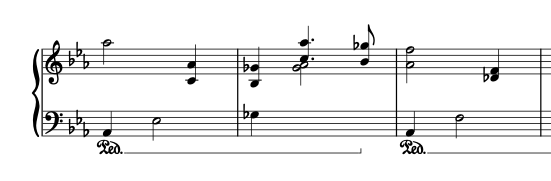
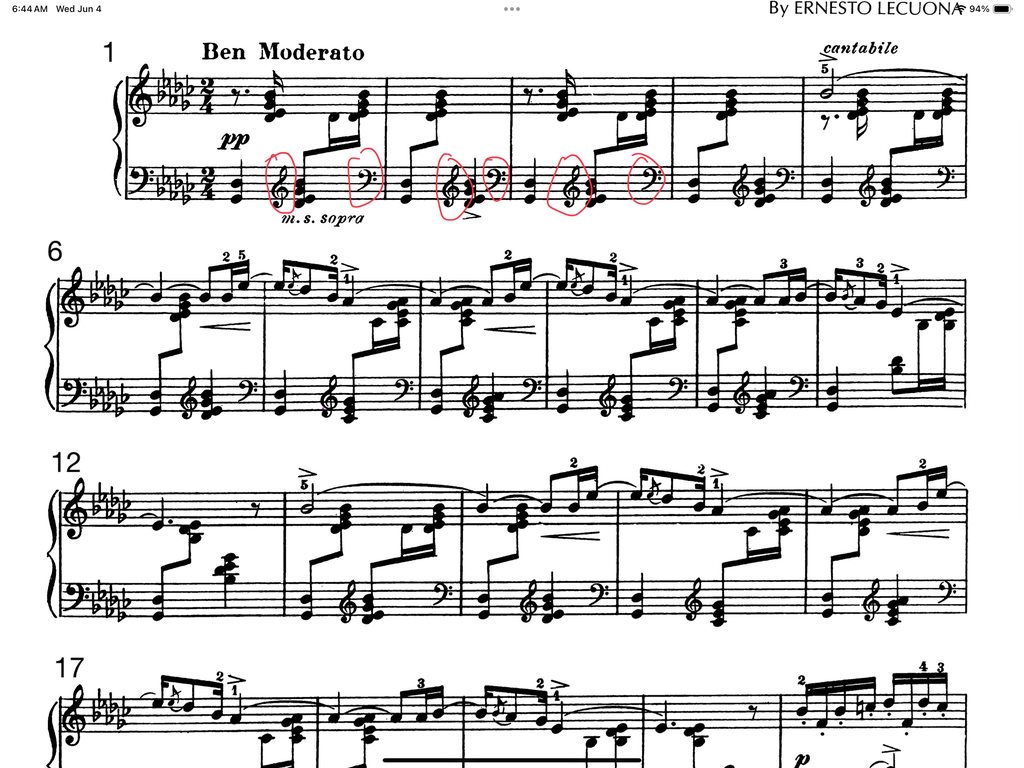
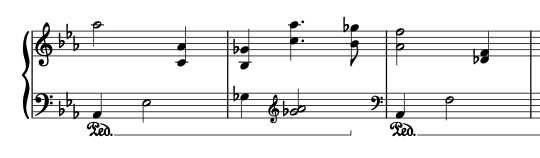
Piano music is full of examples where the treble clef is used for the left hand or the bass for the right. When the left hand needs to play notes that are too high to be read comfortably in the bass clef, either there is a clef change to treble on the bottom staff, or the left hand notes cross over to the upper staff, thus:
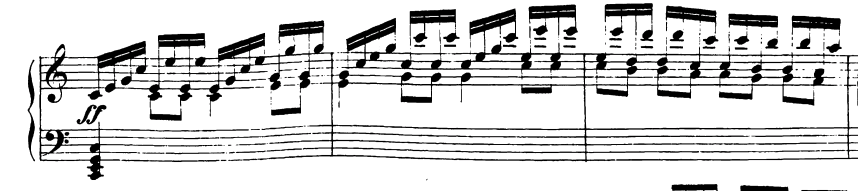
(from Beethoven Opus 2 N° 3)
Or look at a piano duet. The music for the player who sits on the right is most of the time written with two treble clefs, which the music for the player who sits on the left is most of the time written with two bass clefs.
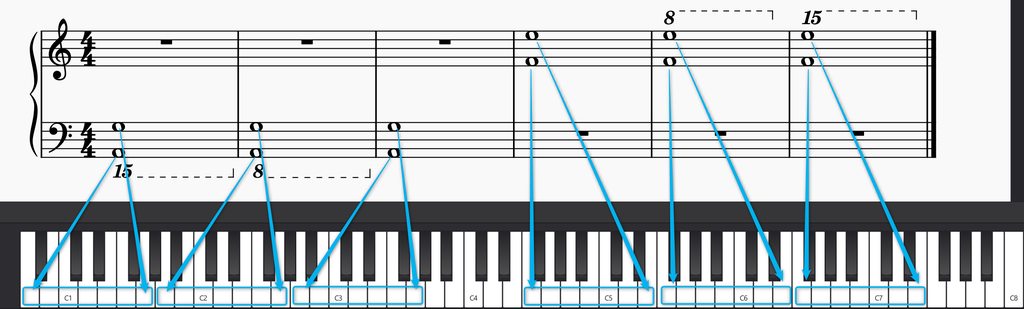
Regarding ledger lines and octave transpositions, the convention is this:
Use ledger lines as much as possible, in preference to octave transpositions. The music written with ledger lines shows the contour of the passage, indicates hand stretch and keeps the feeling of geography.
If a whole passage is very high on the keyboard, it's fine to use an octave transposition for that passage. If possible, keep the transposition for a whole phrase. Changing octave transposition in the middle of a phrase breaks the musical line.
Some comments on the examples presented above:
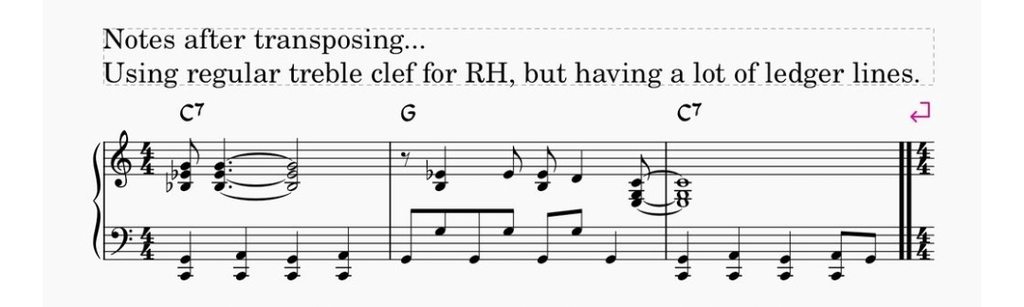
The first version, with the regular treble clef, is fine. Any pianist with a reasonable reading level will immediately recognise the top note of the last chord in the RH as middle C, and from there the shape of the chord tells us the other two notes.
The second version will throw even advanced pianists. We are simply not used to seeing RH notes transposed down an octave. When I see that version, my right hand instinctively reaches for the treble region, not the middle of the keyboard where the passage should be played.
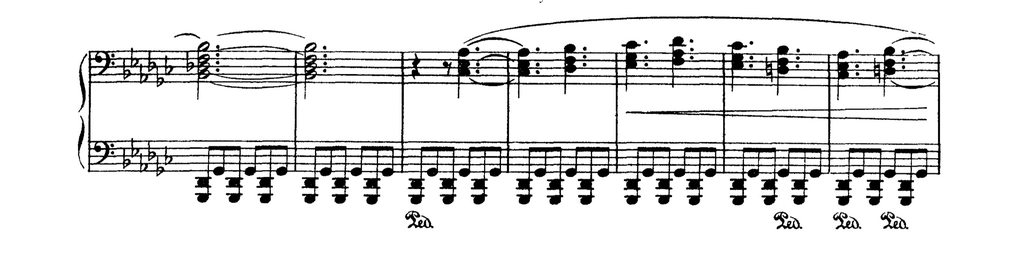
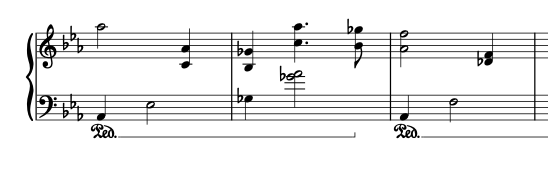
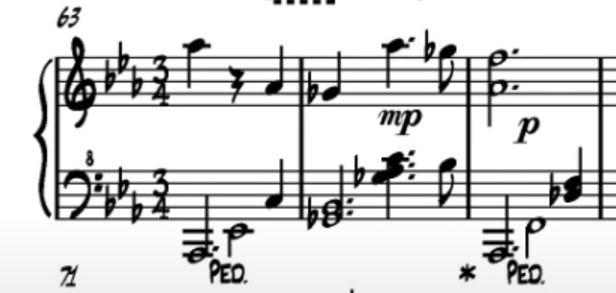
As to the Keith Jarrett transcription, it's extremely hard to read as presented in that YouTube video. I highly suspect that many, or even most pianists wouldn't notice that little 8 above the bass clef, and even if they do notice it, they won't play the left hand part fluently because the usual relation of place of a note on a staff and corresponding place on the keyboard is disturbed.
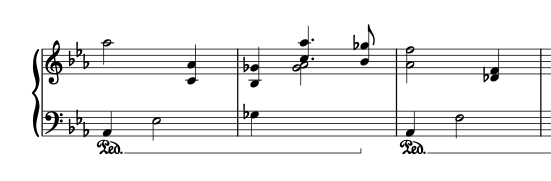
The octave transposition clef isn't the only problem with that transcription. I won't go into the details, I'll just give one possible version of bars 63 - 65 that adheres to usual notation conventions and distributes the notes between the hands in a more logical manner: