pianoloverus I think a major scale and a relative minor are almost always practiced together.
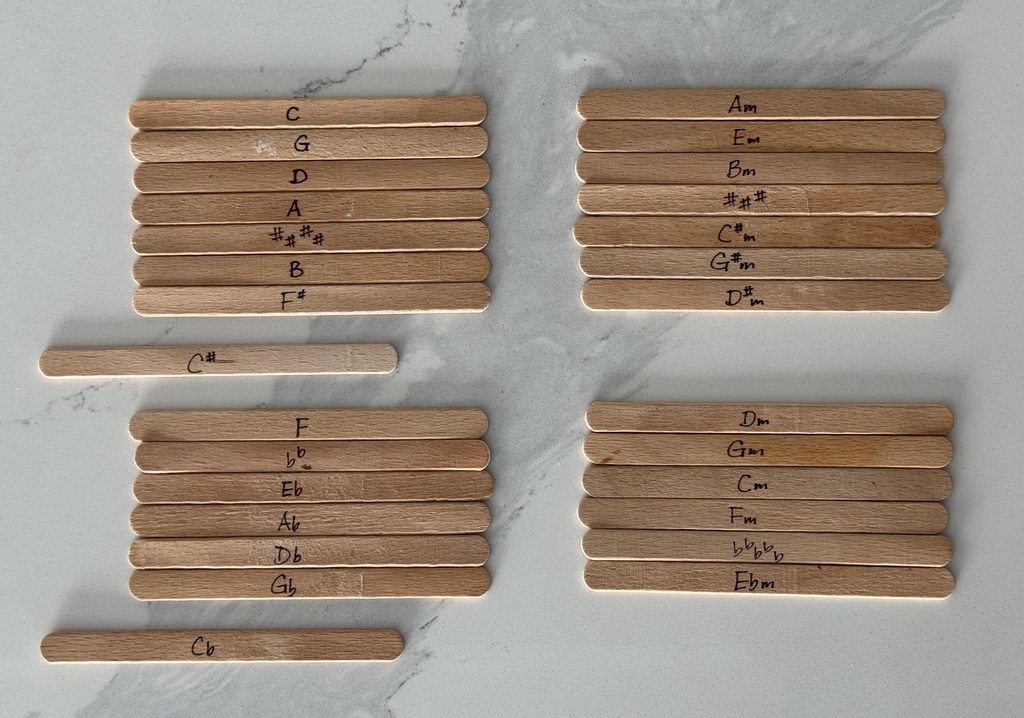
Actually, I don't practice the relative minor and I have a specific reason for that which I'll explain. I practice the parallel minor instead of the relative minor. I have paper slips with the 12 possible starting notes and if I pick one, say G, I would practice G major and G minor that day.
My reasoning is that I practice all the dominant chords, arpeggios, and cadences in those keys and those are almost the same for the parallel major/minor but completely different for the relative. For example, if I'm practicing G major/minor I do the D dominant 7th blocked/broken/arpeggio and then I do a I-vi-IV-V64-V7-I progression on G major and the equivalent in G minor.
If you know all your keys then I would advise you specifically not to practice major/relative minor and follow the circle of fifths. That way of practicing means that all the white key arpeggios are bunched together and all the 1 black key arpeggios are bunched together and all the 2 black key arpeggios are bunched together. I think for didactic purposes it's much better to randomize and mix the various types. As soon as I knew all my keys I started practicing in chromatic order, which is almost as good as random.