Meanwhile, I played with this, and I'm hoping that what I'll present will be seen as a dialog, with possibly new angles for you to explore, rather than a debate because I don't do the "see who's 'right' debate" thing.
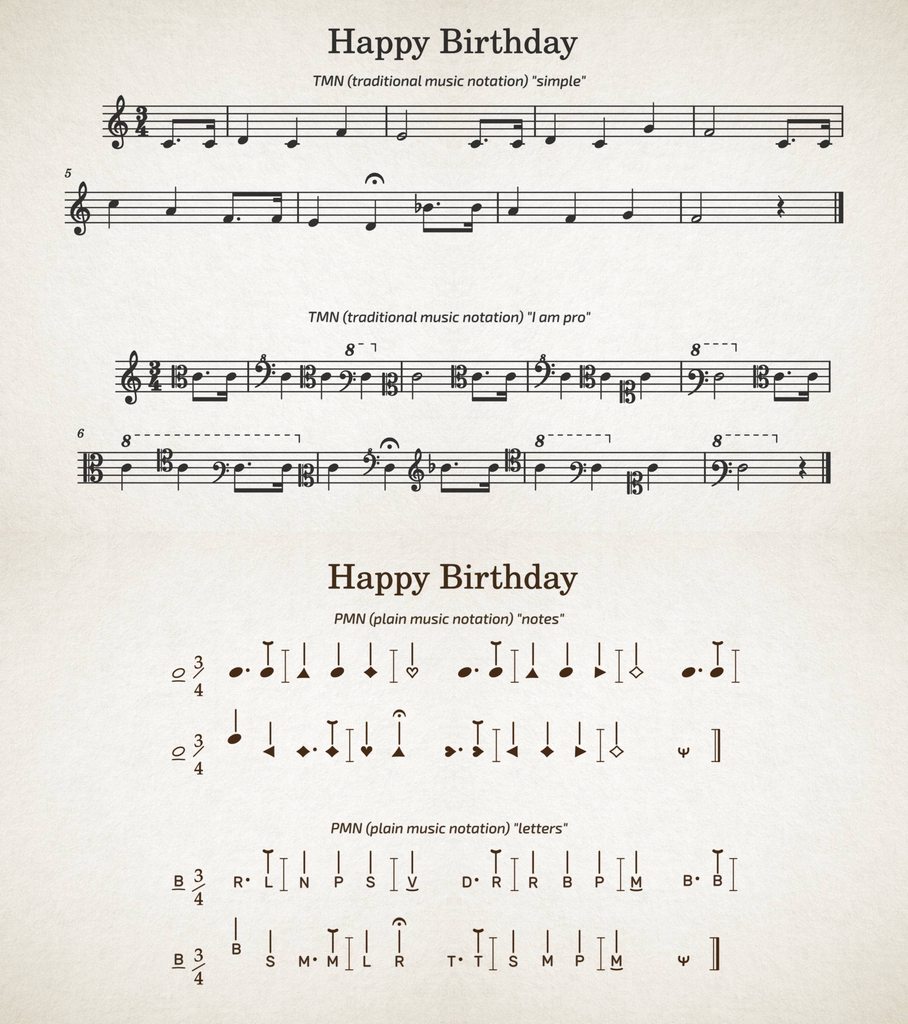
PASHKULI I know it is nothing musical but for the sake of experiment, good luck reading this with less than a day learning it:
Because of HOW I worked, and my background, it took me 13.45 minutes, so rounded up - 14 minutes - to get it so I could read it smoothly. The result, finishing with a scale I perceived afterward.
https://www.dropbox.com/scl/fi/nhzl1d2wr60o1k0d4pyd3/Pashkuli.mp3?rlkey=ez2f32093ln5dfy7jojjle0z9&st=mqoal7sv&dl=0
Pertinent background, and how I worked
background I only learned to read when I was close to 60. Before that, I'd have an imaginary line through the Tonic and 'hear' the music along an imaginary major or natural minor scale, in relative pitch - the music I encountered tended to be diatonic. It was in relative pitch, and I was not that aware of an individual note other than first finding the starting note. I did not have an association of "first line = E = that piano key". The first time I encountered music outside those patterns, I discovered a major weakness in reading (I couldn't read it) and sought "real" reading.
(2) In that quest, I learned to associate noteheads with piano key locations. Those are the white keys. Accidentals were treated as 'traffic signs' - b = move a semitone lower, to the left; # = move a semitone higher, to the right. This gives just about everything, though getting a handle on your scales would make it a tad faster.
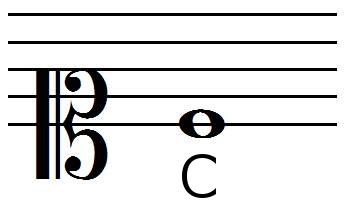
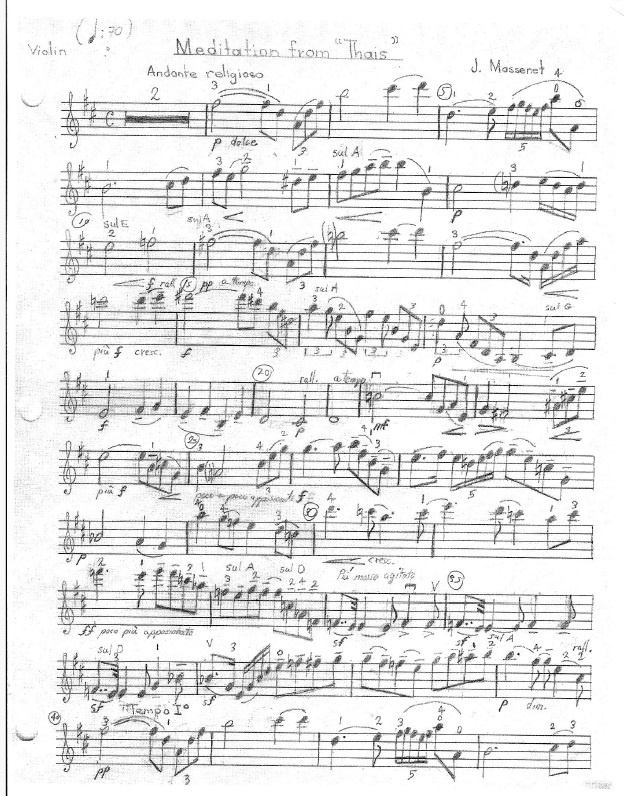
(3) Before that, I crash-coursed myself into theory (RCM) where the 3rd level includes the C clefs. I played around with playing music notated in tenor and alto clef, and later also music written with the G clef in various places (as in original Bach). To do that, I reverted to my original way of reading music: Here's where we have G (or C, or F), and these notes are that far away. A scale looks like a diagonal line.
What I did with your notation was a hybrid of all of this
How I did it
- Find where G is, since the G-clef points to G. The bottom line is C. I did that with my hands at the piano.
- The key signature flats the note above G (so Ab) - found physically. That's "traffic sign".
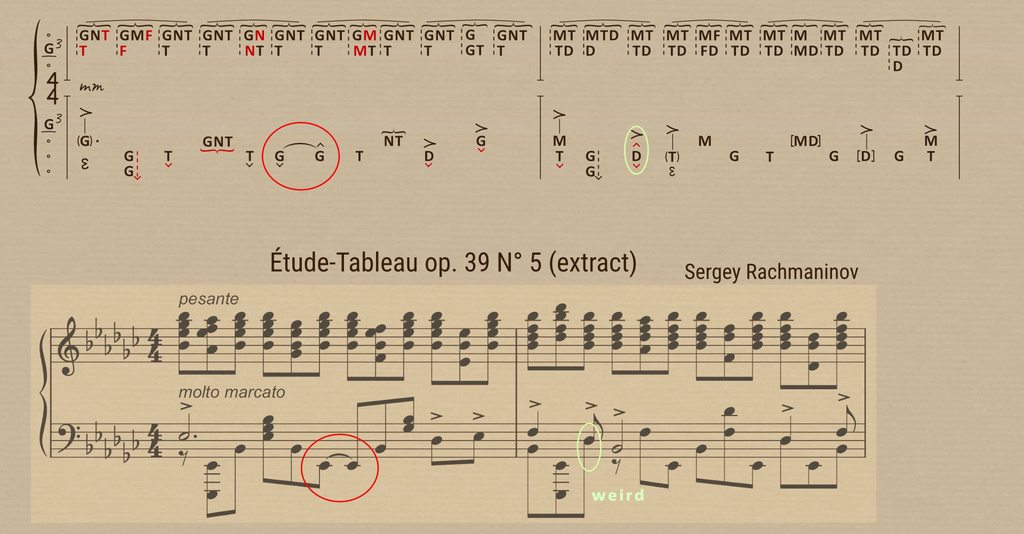
- In the 2nd half, the "2nd line note" has a "down one" traffic sign, followed by a "up one" traffic sign. In playing the music I just obeyed the traffic sign.
- I played through the music slowly, sort of "intervalically", noting which notes didn't move and so on. I could do that instantly, but there were hesitations.
- I made note of patterns. Beat 2 starts like beat 1 and the previous pulse has a resolving feel to it so that gave a kind of musical pattern and orientation point. The C Eb Ab D - that Ab D is an aug2 so a "3rd" feeling but a "2nd" look. I made note of that chord, to be careful with it.
Then the results you saw.
If there is any point, then it is that part of the equation is HOW we read music, and how we learn to read music. I went totally out of the box when learning to read music, did not follow anything conventional, worked with someone who did not do things conventionally. What I can do does not come from many years slogging through graded material in any standard manner.
This part:
PASHKULI good luck reading this with less than a day learning it:
I never quite understand how the word "learn" is used. Do you mean "memorize"? If I am reading it from the page, then I don't have to memorize it - I just read it. Otoh, if I aim to memorize, then how it's written doesn't matter because I'll have memorized it.
It took me under 14 minutes - certainly not over a day. But this has to do with both background and approach. That's the other side of the equation of reading.