I'm not sure if this qualifies as an unusual practice technique, but it's one I wouldn't have thought of on my own.
I'm working on Chopin's Mazurka in G Minor, Op 67. No. 2. Take this passage:
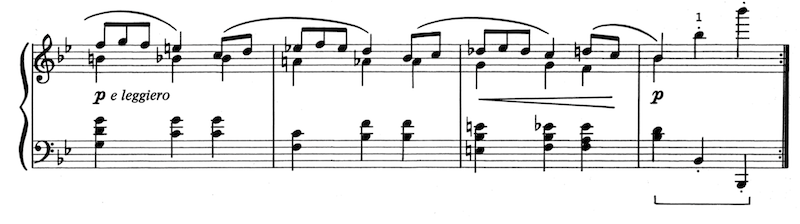
The right hand was pretty easy to learn, but I was clumsy and unsuccessful incorporating the left hand. So we set the metronome slow (♩ = 52), and did just the third beat of the third measure, into the first beat of the fourth measure. Just that, over and over.
Next, incorporate the second beat of that third measure. Practice just going from the second beat to the third beat, paying attention to the intervals in the left hand to know you only need to do one finger change (5-2-1 -> 5-3-1).
Next, play the first beat of that third measure. Then play the first beat into the second beat, again paying attention to left-hand intervals knowing you can change chords without looking at your hand. Only when that is solid, play all three beats and one into the next measure.
Just keep doing that, going backwards by one beat each time. Pay attention to how your fingers can guide each other on the chord changes without looking down. Play different combinations of beats if there is a transition giving you trouble. Don't keep playing through, just play the 2-3 beats whose transitions are troublesome.
Finally, play the whole phrase (including the last beat of the measure not pictured, which leads into the phrase I screenshotted). Only when you can do that do you increase the metronome ticks.
I'm mostly there on the passage at ♩ = 54. It's been helpful to break it into the smallest bites, working backwards. I think the "work backwards" part is the unintuitive portion for me.