We're starting a jazz PIYW soon, so for beginners who are intimidated by jazz and lead sheets, I've written a guide. I won't go over beginner improvisation methods, but everything discussed here is good foundation for improv. The suggestions below also apply to other styles of music where lead sheets are used (blues, pop, etc.).
A lead sheet is a simple way to write out the essence of a tune: the melody, the chords, the lyrics, and that's it! It's up to the performer to fill in all the other details.
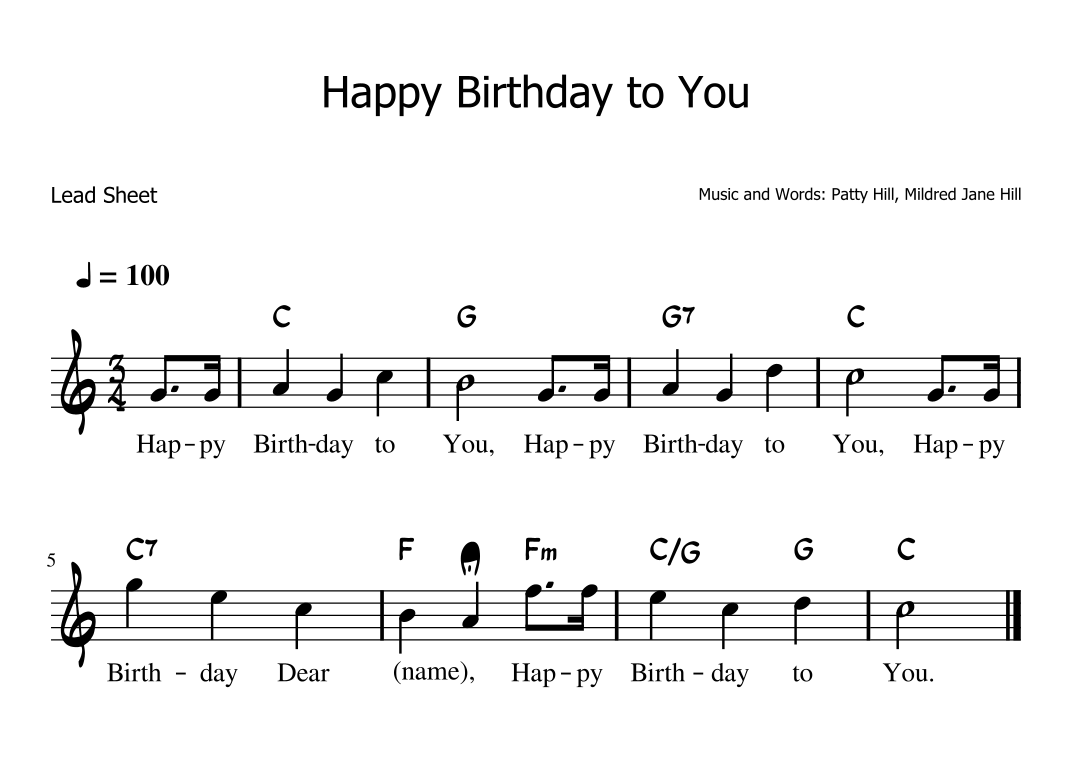
More information about lead sheets
Not interested in using a lead sheet? Then there is Option 0: Find a simple arrangement. For songs that are popular, it is easy to find one. This is the common choice for most beginners, but I would encourage you, at least occasionally, to try lead sheets. They open up a lot of musical avenues, bettering your ability to play in a band, improvise, perform songs with minimal practice, play by ear, take requests, and to be flexible and unafraid to make changes to a written score.
With all that out of the way, here is a list of easy ways to use a lead sheet, in approximate order of difficulty.
I suggest practicing more than one option (but practice them one at a time). Then, when it's time to perform, you can switch between the options as desired.
Option 1: RH melody + LH root. The root is the note listed in the chord symbol (for example, the root of C7 is C. The root of Bb#7b9 is Bb). Wherever a chord symbol appears, play the corresponding root note in the left hand, and hold it until the next chord symbol. Right hand plays the melody line shown on the lead sheet. This method can sound empty, but it's good practice and it combines well when used in conjunction with the other styles listed below. Some ways to dress this up are to alternate between the root and the 5th, and to use approach notes (for example, if the root changes to D on Beat 1, play a C# or a Eb on Beat 4 just before the 1).
Option 2: RH melody + LH chord. Wherever a chord symbol appears, play the corresponding chord in the left hand, and hold it until the next chord symbol (usually a whole note or half note duration). You can use a chord dictionary for unknown chords. Right hand plays the melody line shown on the lead sheet. This method will often lead to a lot of jumps in the left hand, which can be an issue both because jumps are hard to do and because the jumps don't sound smooth. You can try smoothing it out by using inversions. When you feel comfortable, you can also alter the rhythm of the left hand, as shown in the first few seconds of this video:
Basically you are treating your left hand as a guitar strummer while your right hand sings.
Option 3: LH arpeggios + RH melody. break up the left hand chords from Option 1 into arpeggios.
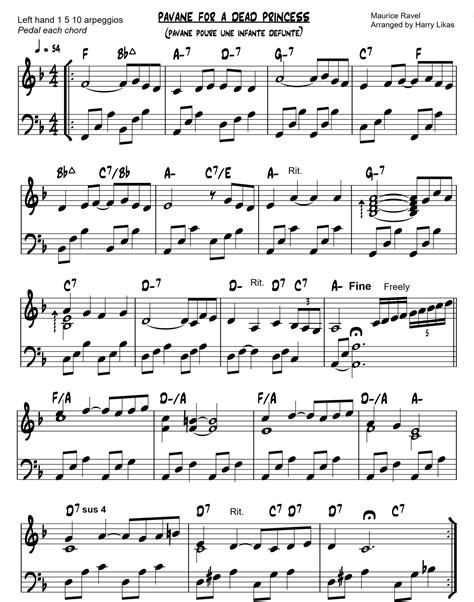
Option 4: Play with accompaniment. same as Options 2-3 above, but with drums and bass. Much more fun! (Option 1 doesn't work well when there is a bass player). If you want to get fancy, you can use rootless left hand voicings. (The rootless voicings work well because the bass is already playing the root.) If you don't have drummer or bassist friends, there are other ways to get their music:
A. YouTube. Look for backing tracks with no piano:
B. iReal Pro or Band in A Box. These apps generate backing tracks based solely on the chord progression. They sound a little robotic, but they are much more flexible than youtube videos. You can change tempo, pitch, specific chords, volume of individual backing instruments, etc. My understanding is iReal Pro is simpler to use, but BIAB has more features (I use iReal).
iReal Pro sample
Band in A Box sample
Option 5: Shell Voicings Play only two notes in the left hand: The root and either the 3rd or the 7th. For example, for a C7 chord, you could play C and the Bb above it. Then if the next chord is am F7, play F and A (closest to the Bb). Moving from F7 to G7, play G and B. Back to C7, play C and Bb. Explanation with examples. Shell voicings are particularly good when the right hand is very busy, and you want a simple left hand that doesn't get in the way.
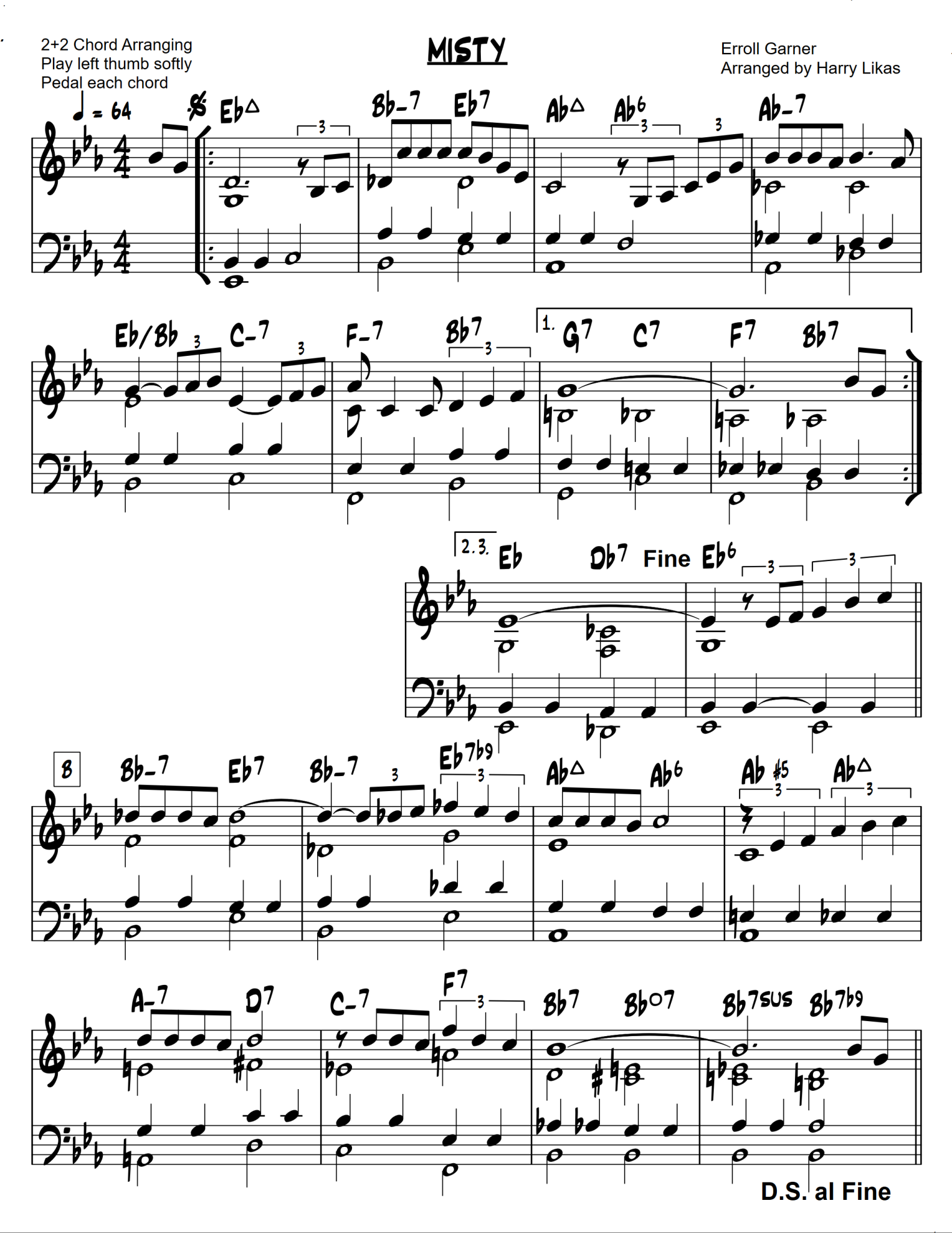
Option 6: Three-note voicing Mark Levine's Jazz Piano Book describes this in more detail, and almost all of the arrangements Harry Likas posts at Pianotell are based on this concept. In general, 4 voices are played simultaneously: two in the right hand and two in the left hand (3 accompanying voices + melody). At the very top, the right hand plays the melody line. At the very bottom, the left hand plays the root (the note named in the chord symbol). In between, the left and right hands play the 3rd and 7th of the chord (or the 7th and 3rd if it's smoother-sounding/more convenient). If the melody contains the 3rd or 7th, one of the inner voices can play the 5th of the chord instead, to avoid doubling.
Option 7: Explore other LH patterns. The possibilities for the left hand are enough to last a few lifetimes. Here's a page of patterns to explore.
How to Practice
It takes time and effort to be able play a lead sheet using the above methods, but with enough practice, it will become second-nature, and you might surprise yourself at how your sight-reading skills have improved. My advice is pick a few of the options above that you think suit the tune you are learning, learn the tune using each of the options separately, and then try switching between options on the fly as you perform.