On Friday, I had the chance to present and perform at my son’s 3rd grade music class. This is something I have never done before. I had filled in a form months ago and forgotten about it, but it’s apparently something I had volunteered for.
Here are the slides I shared.
I started the presentation by playing the initial pentatonic riffs from the “It’s A Kind Of Magic” lyric — hence the title of the talk.
As a child, a lot of my fascination with music started thanks to my uncle playing the harmonium. It seemed like no matter what he played, every note sounded absolutely beautiful and harmonious. I played a sample of what my uncle might have played back then to get the kids interested!
I brought in various kinds of harmoniums I had on hand, which was a bit of a feat because that was the one day of the year when it began to snow….
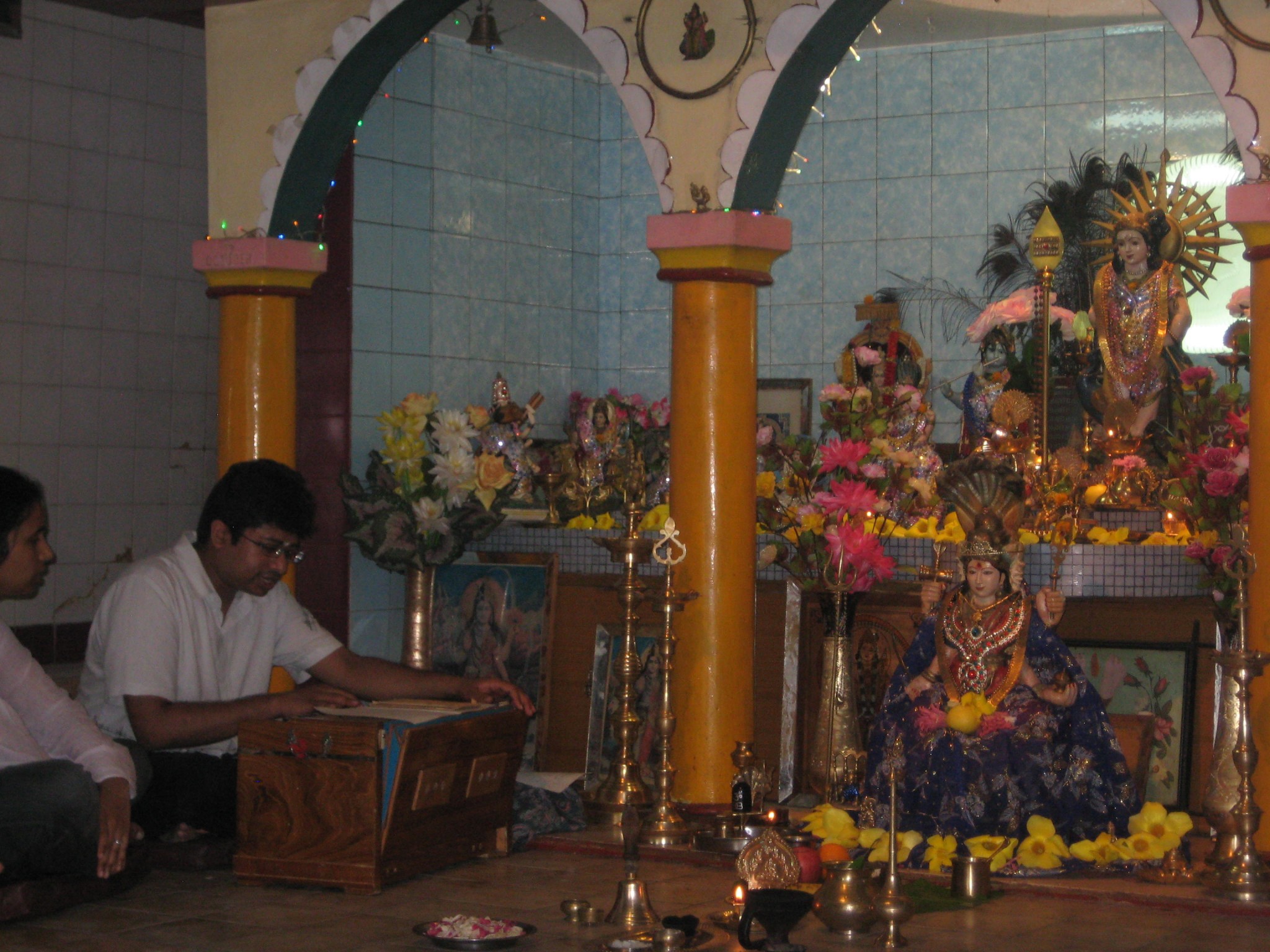
I spoke a little about the harmonium, I showed them how horrible an individual reed might sound, but then how beautiful it sounded in the context of the harmonium. I even opened up one of the harmoniums and showed them the reed banks and general construction.
The interesting thing about the harmonium is that it was introduced to India to great controversy. It was popular and highly controversial at the same time, because it fundamentally goes against the concept of Carnatic and Hindustani music where notes aren’t fixed.
I explained a little about Carnatic music, what it gained, and what it lost by having so many pitches at the musician’s disposal. To demonstrate, I played some of the chords from Cheers on the piano to help explain something that worked in Western music that wouldn’t work in Carnatic music.
In fact, growing up, I had great difficulty understanding the concept of chords at all. This also helped explain how and why the harmonium evolved to being a single-handed keyboard in India.
Picking up the thread on how my uncle could always play beautiful music, so consistently, I introduced the concept of Raagas, and demo’ed a couple of them.
Resuming from how I had started the presentation, I focused more on the Pentatonic Scale and the equivalent Raaga. First I played the infamous oriental riff using 4ths & pedaling on the piano (which the kids loved), then I played two contrasting bhajans in pentatonic scale.
The kids enjoyed this bit a lot!
Then I switched to the major scale and we had an interactive song (Chandava Priya Kara) where all the kids got a percussion instrument and played along. It was a lot of fun!
I ran out of time, but that was a great way to end indeed.
I had intended to play another pentatonic song without telling the kids and seeing if they could pick up on it. It would have been completely different from all the others I had played so far. Then I had prepared a final interactive song. I would have let them have some hands-on time with the harmoniums as well.
All in all, the one thing I wanted to hammer in for the kids was how accessible the pentatonic scale was. It can be found everywhere, can be quite versatile, and is easy to improvise on. And it would hopefully inspire them to do more.
I’m considering this one an unplanned but successful music project for 2026. 🙂