I was practicing an etude and came across a turn that made me uncertain how it was supposed to be executed. The composer is the French pianist Hélène de Montgeroult and the etude was first published in 1820. This particular edition is from the anthology Women Composers book 2 by Melanie Spanswick and published by Schott music in 2022. The original can be found at imslp It's on pdf page 14 (labeled page 8 in print) bar 13.
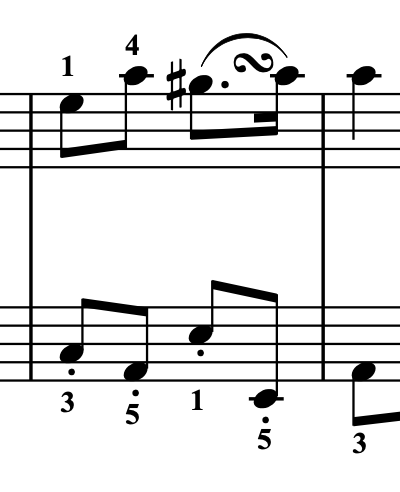
So the piece is in C major and the principal note of the turn is G#, ie the raised fifth of the scale. There is no explicit written sharp or double-sharp under the turn. What are the rules in this case? Do you play G#-A-G#-F#-G#, or perhaps G#-A-G#-F##-G# or something else? (Sorry, couldn't find a double sharp sign) Playing the scale note below (F) an augmented second below the principal doesn't make musical sense.