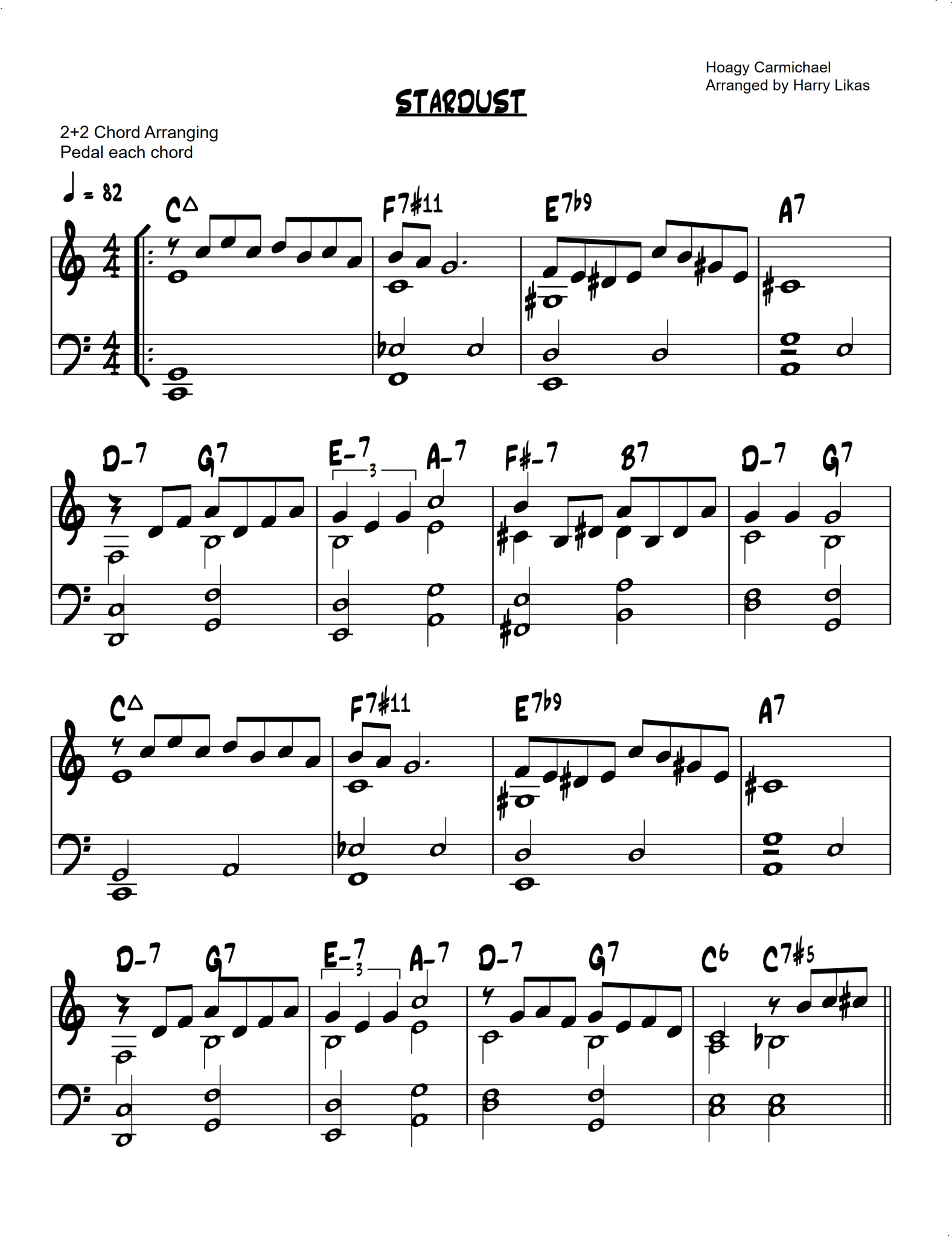
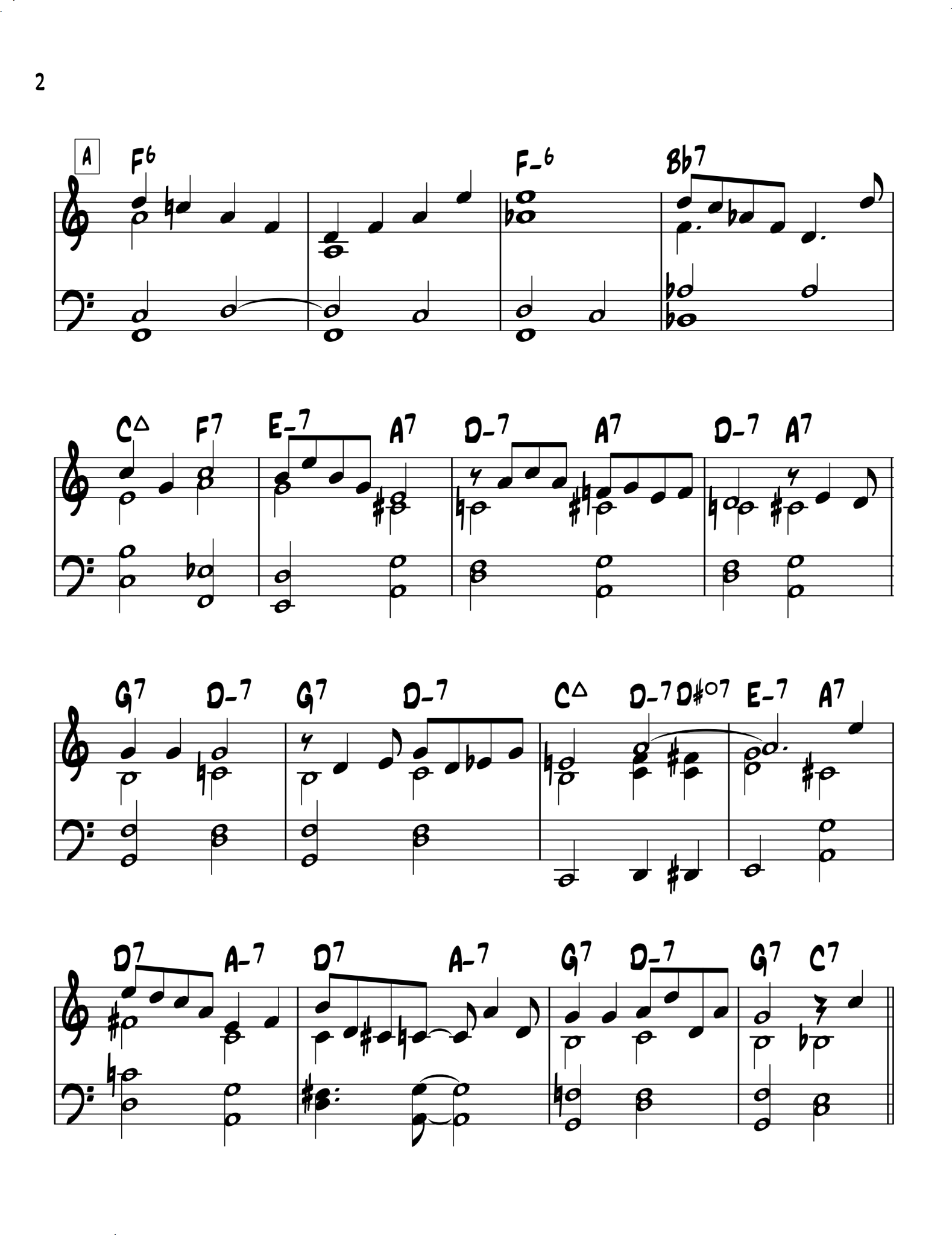
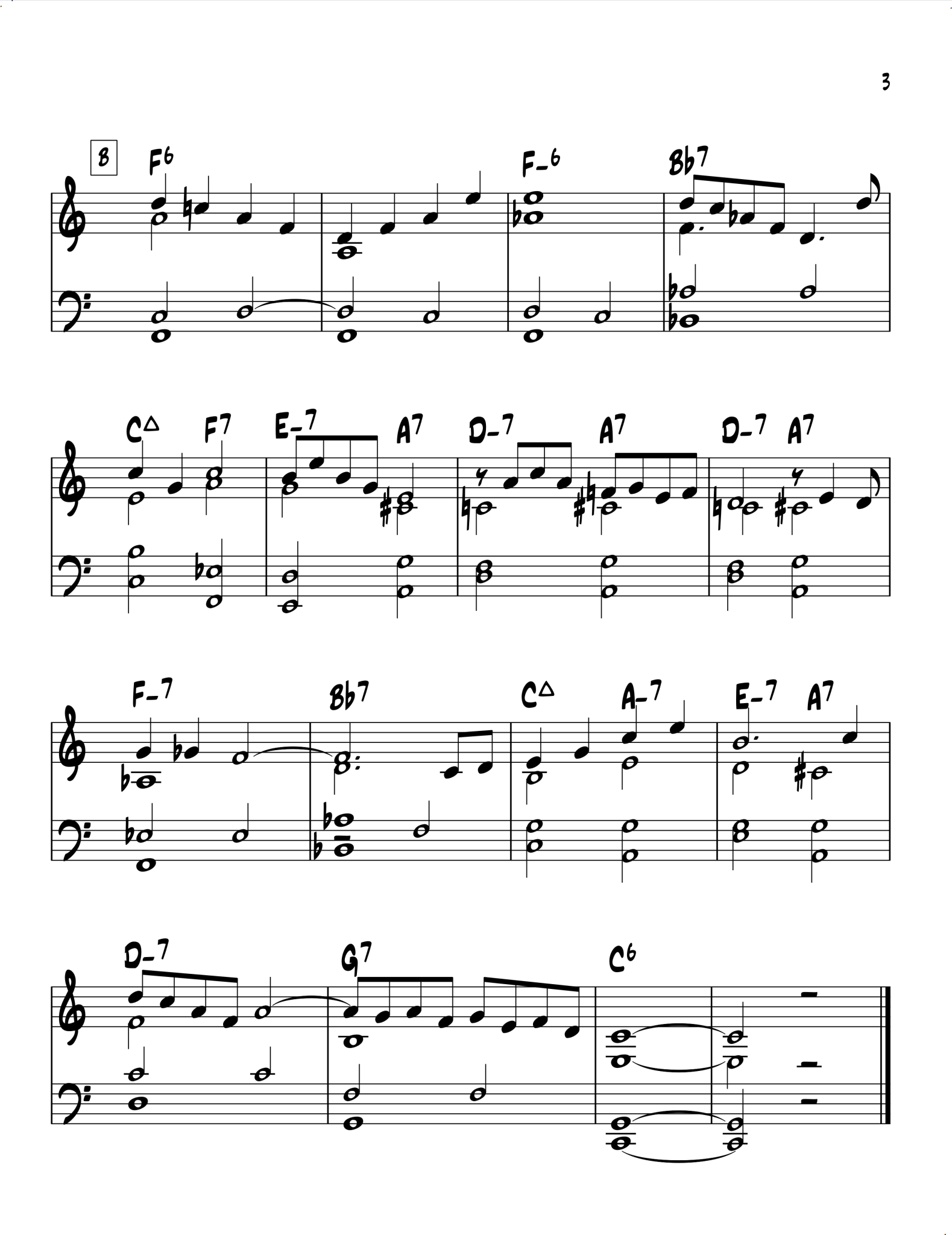
I've arranged "Stardust" using my 2+2 chord arranging method for solo piano.
“Stardust” is an American standard composed by Hoagy Carmichael in 1927. Carmichael originally wrote it as an instrumental—initially titled “Star Dust”—not for a specific show or film, but as a standalone popular song inspired by a nostalgic, dreamlike mood; it later became one of the most recorded songs of the 20th century. Its wistful melody and rich harmonic structure quickly attracted jazz musicians, and it has been famously interpreted by Louis Armstrong, Duke Ellington, Benny Goodman, Art Tatum, Nat King Cole, Billie Holiday, Ella Fitzgerald, Frank Sinatra, Lester Young, and Charlie Parker, among many others, firmly establishing it as a cornerstone of both the Great American Songbook and the jazz repertoire.
In 2+2 chord arranging, the left hand anchors the harmony, typically playing the root and 7th or the root and 3rd, and sometimes the root and 5th on tonic chords. The right-hand thumb completes the chord by adding either the 3rd or 7th—whichever is not already covered by the left hand—while the remaining fingers carry the melody above.
2+2 voicings are hand-friendly, balanced, and versatile. The left-hand notes can stand alone as a complete accompaniment, while the right hand adds fills or improvisation. With regular practice, the 2+2 system helps pianists move from guessing at chords to playing confident, expressive harmony.
I’ve arranged over 1,400 solo jazz piano arrangements using the 2+2 method and produced 65 tutorials, all available at www.Patreon.com/HarryLikas
I was also the technical editor for Mark Levine’s "The Jazz Theory Book" and a contributor to "The Jazz Piano Book."