WieWaldi But all in all it seems, owners of uprights don't admit, digitals have an edge in this discipline. They just don't talk about it because it can't be what shouldn't be. (Digital action beating acoustic upright action in a specific point)
That's exactly what I've been thinking recently. I guess most acoustic piano players won't ever consider it a good trade off, exchanging the sonority, the dynamics and the haptics of an upright for the repetition of a digital. But that edge digitals seem to have should not be ignored.
sweelinck There is a tradeoff between risk of double strikes and repetition speed when regulating an upright.
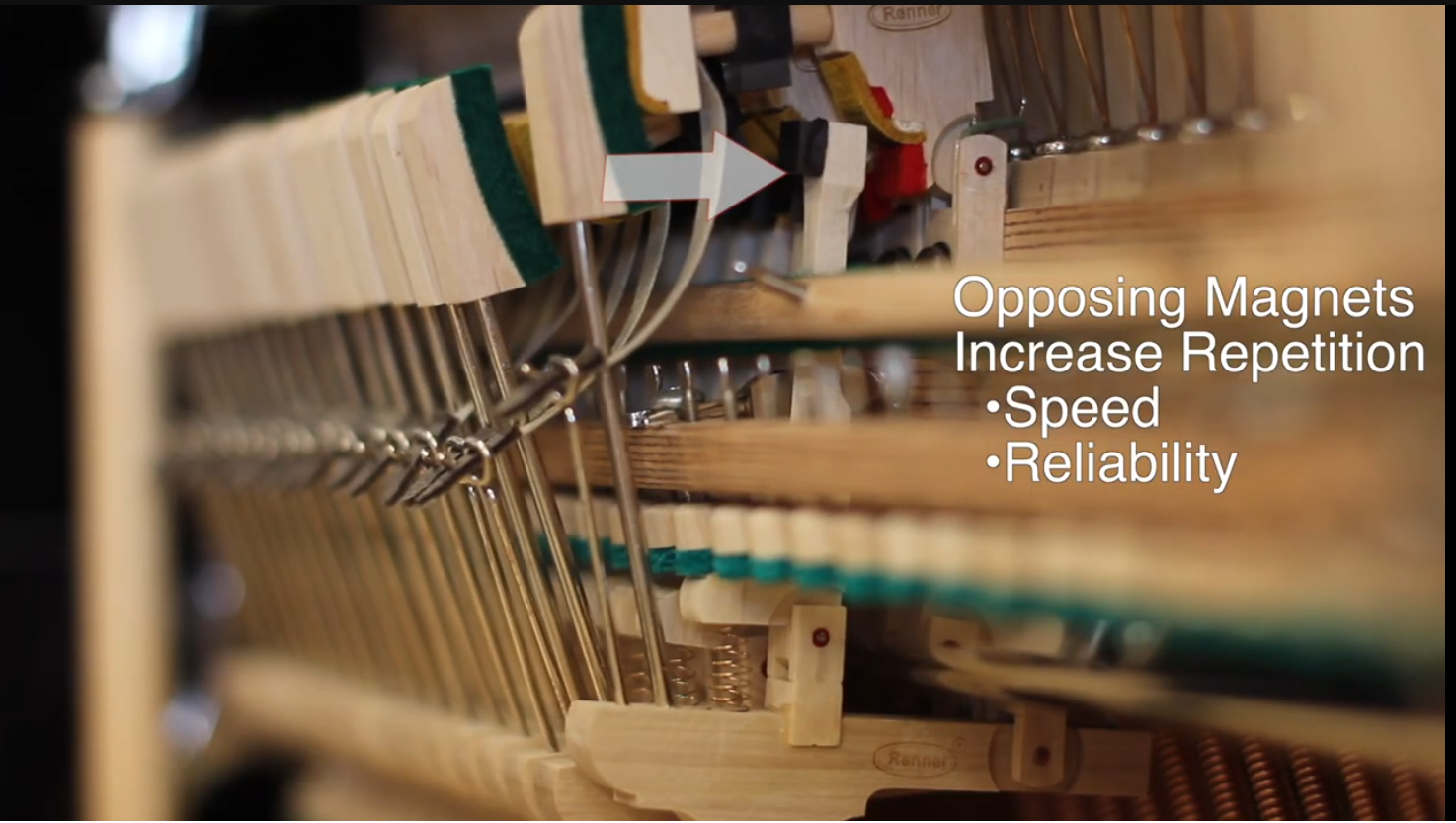
I've checked again some of the fast repetition mechanisms. The video of the Japanese technician seems to be lost media, since the only link I could find sent me to a deleted YT account. If I remember correctly, that mechanism works by repelling the hammer back. I'd imagine that mechanism is not so prone to double strikes, but I don't know of brands adopting such approach, so the drawbacks must outweigh the benefits. Both Feurich and Seiler's mechanisms work by pushing the jack back into place. I would think such approach is more prone to double strikes, considering the jack will go back supporting the hammer sooner, which I suppose is easier for grand piano actions to deal with, because of gravity. But as I said once, trust me not, I'm no engineer.
Feurich:
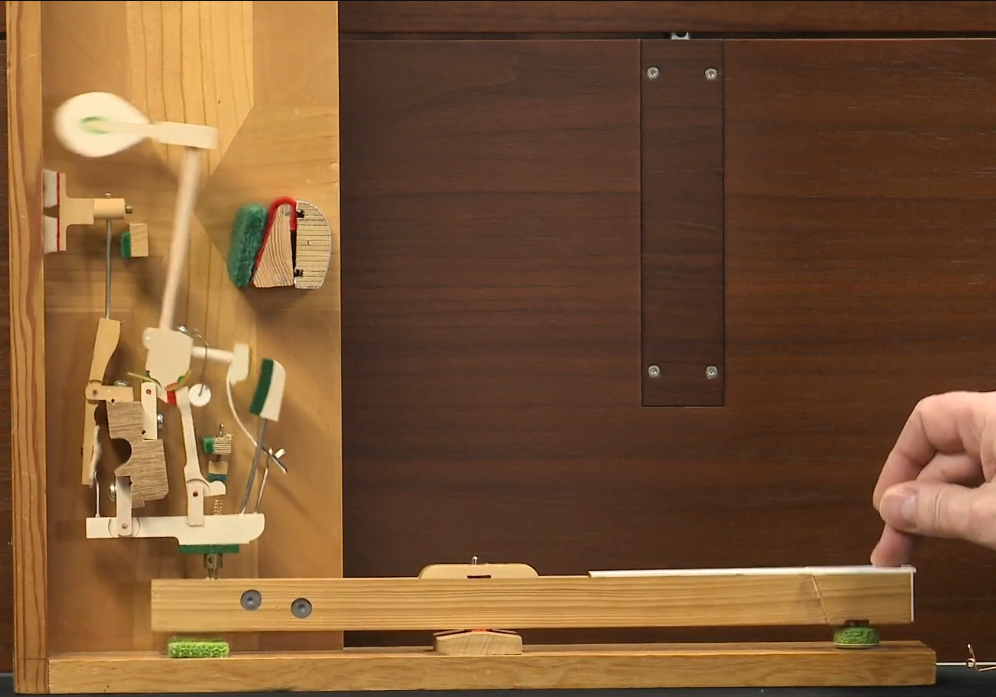
Seiler:
I wonder how easy it would be to retrofit a piano with those mechanisms. I imagine it'd be quite easy for someone experienced in it, but an inexperienced technician might make a mess out of it.
EDIT:
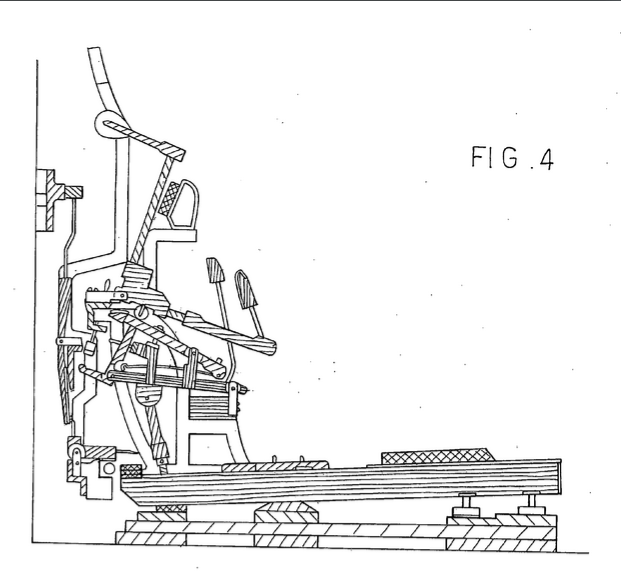
I've just found this by chance. Someone named Pasquale Bafunno patented a rather complex upright action with repetition mechanism.