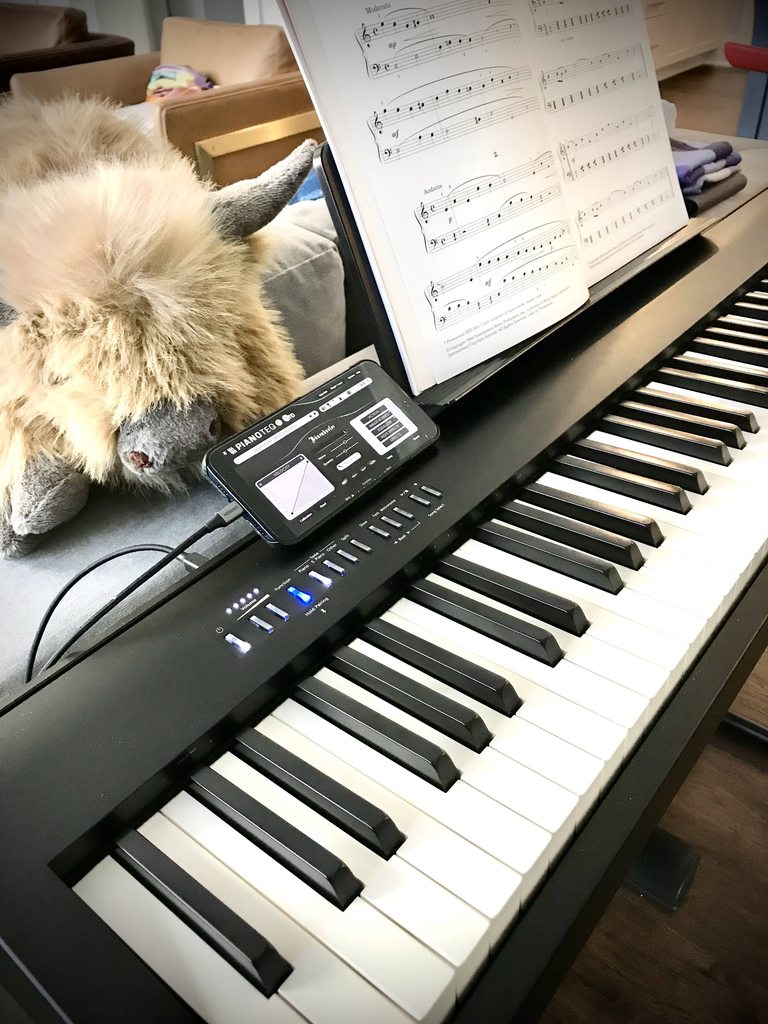
navindra Thanks for the reply and the link with the detailed instructions! Yes, my thoughts about computers around the piano are very similar, and I've really liked your approach to use a dedicated Raspberry Pi from when I first read about it when I had just started out on piano. Also, PT 9 sounds noticeably better to my ears than version 7 back in those days, so I guess I'm ready to take the plunge. I'd very much prefer to keep the computer away or at least out of sight and out of mind when playing. Just having a default instrument setting that the the system boots up to, similar to on a digital piano, would be perfect for probably more than 95% of my use.
navindra Btw, have you considered running Pianoteq on iOS or iPadOS? It is excellent.
Well, yes I've briefly thought about it, but I don't think I'll go that route. It does indeed look convenient, but I don't currently own any iOS device. Do you notice any difference in technical performance between using iOS and Raspberry Pi for Pianoteq, or is it just a matter of convenience? Does either ever struggle due to the somewhat less powerful processors than in modern computers? If the Raspberry Pi 400 was up to it as I understand your experience, the newer 500 should be even better equipped, assuming version 9 isn't significantly more demanding than its predecessors. Maybe it won't even require overclocking with a default clock speed of 2.4 GHz and an overall newer design?
I also have some other reasons to dip a toe in the Raspberry Pi environment and learn the basics, so just spending 100-150€ on a Raspberry Pi 500 seems much more reasonable for me than getting an iPad. I imagine I won't need to access the Pianoteq interface often once I've found a good enough default setting as I would prefer spending my time actually playing the piano. Too easy access to fiddling with settings could be a time sink for me and would go against the whole reasoning for my wanting a piano-in-a-box solution. I just want a good and straight-forward playing experience but with better sound than Roland's built-in modelling and less hassle than the VST I actually own but never use. If I'd wish to change instruments or something else in Pianoteq I could access the Pi wirelessly or with a monitor using equipment I already own. I could also use a second PT installation on my laptop for the rare recordings if that would be easier.