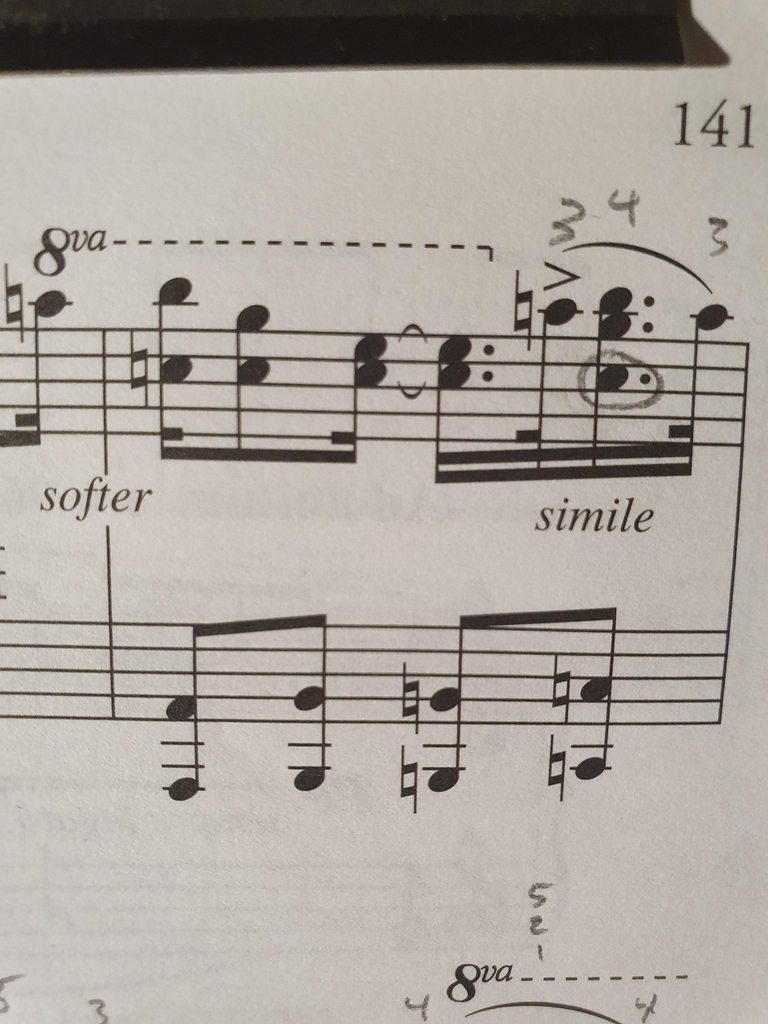
The tied note doesn't change anything here. The missing natural sign is simply something that has been overlooked, either by the composer or by the editor.
In older scores (18th or early 19th century), it's very common to see an accidental omitted when moving up or down an octave. There would be an accidental in front of one note, and you would infer by the harmonic context that it should apply to the same note in other octaves. I think the rule that an accidental only applies to the octave in which it is written became accepted practice during the nineteenth century. I don't know when it was "officially" adopted, but it's still quite often neglected today.